
Representatives of seven civil society organisations whose projects are supported under the programme “Protection of Rights and Promotion of Digital Citizenship: Montenegrin Digital Shield (MDS)”, implemented by the Centre for Civic Education (CCE), in partnership with the SHARE Foundation and in cooperation with the Agency for Audiovisual Media Services (AMU), with financial support from the European Union and co-financing from the Ministry of Regional Investment Development and Cooperation with NGOs, visited AMU today to gain a closer understanding of its work.
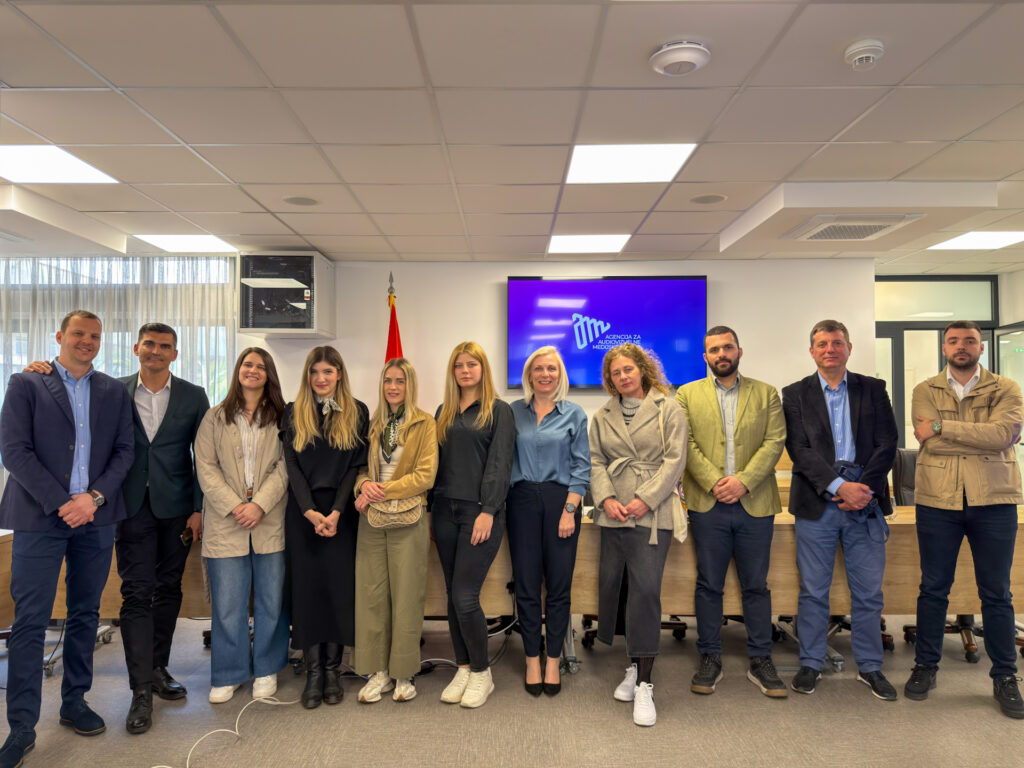
Representatives of the AMU, Director Sunčica Bakić and Public Relations and Project Management Officer Damir Nikočević, welcomed the representatives of civil society organizations. Bakić presented the Agency’s competencies, as well as its role in improving professional standards in the media in Montenegro, emphasizing the importance of cooperation with civil society.“These kinds of initiatives are extremely important as they contribute to strengthening digital literacy, protecting the rights of citizens, and building a safer and more responsible online environment. Within its competencies, the Agency will be a reliable partner to civil society organizations in implementing activities that contribute to these goals,” Bakić stated.
Given that all seven supported projects focus on the protection of digital rights, particular attention was devoted to the online environment. Bakić explained that social media platforms are not treated as media under Montenegrin legislation. “However, this does not mean that certain social media accounts cannot be considered media. Influencers with a large number of followers and significant influence may also be considered media,” she clarified.
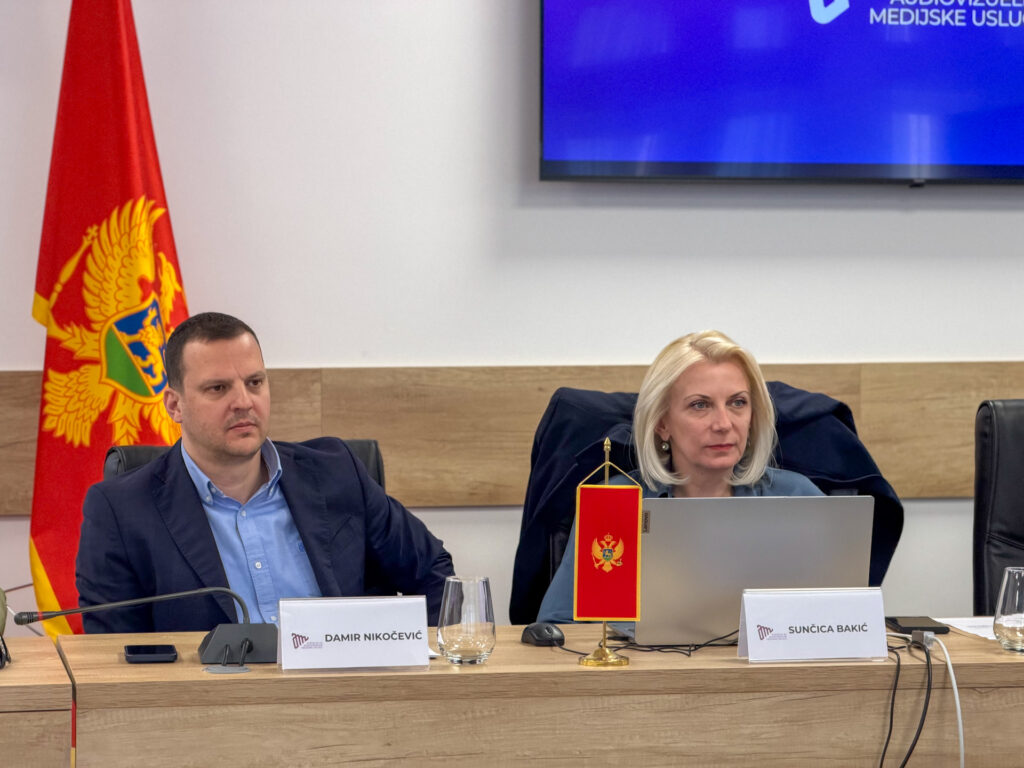
The meeting addressed the supervision of audiovisual media service providers, the protection of the public interest, and the promotion of responsible and professional media conduct, as well as current challenges in the media landscape, which are becoming increasingly complex with the development of artificial intelligence. These include combating disinformation, hate speech, and regulating content on social media platforms.
“Representatives of the Agency provided further insight into their competences, the technologies used in their implementation, as well as the numerous current and future challenges brought about by the development and complexity of digital media, including those of a legal nature,” said Matija Stojanović from the Alumni Academy of the Faculty of Law at the University of Montenegro, which is implementing a project titled “Through Law in the Digital Galaxy: A Safe Click is Your Virtual Shield”.
Anđela Tomović from the NGO Prima, which is implementing the “Kind Online” project, highlighted that the visit helped her understand that regulation is far more complex than she had initially assumed. “I particularly appreciate the knowledge they shared with us today, both theoretical and practical. I also gained a clearer understanding of how challenging it is to align media activities with legal regulations,” she stated.
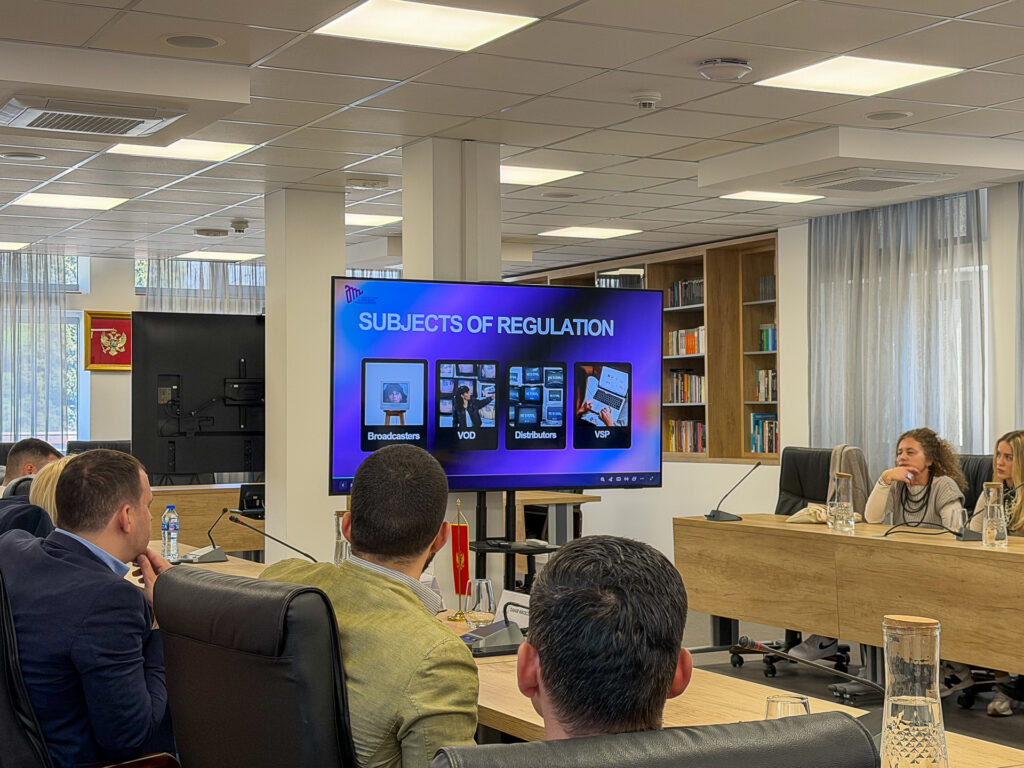
The meeting was interactive, featuring an exchange of views and questions, which contributed to a better understanding of the role of regulatory bodies in the field of media.
The visit was attended by representatives of the following organisations: Multimedijal, Organisation KOD, the Centre for European and Economic Studies, NGO Prima, UZOR, the Alumni Academy of the Faculty of Law, and the Trade Union of Media, as well as representatives of CCE and the Agency for Audiovisual Media Services.
Nikola Obradović, Programme Associate