
Centre for Civic Education (CCE), marking 18 April – the International Day for Monuments and Sites, informally known as World Heritage Day, highlights that monuments and historical sites are often collateral damage in times of conflict and revisionism, and, unfortunately, such a time persists today.
This day is traditionally marked through various activities, including visits to monuments and heritage sites that form an integral part of cultural heritage. The theme for 2026 is “Emergency Preparedness for Heritage in Crisis”, with a focus on strengthening the protection and resilience of sites threatened by destruction due to conflicts and disasters. The latest dana, according to reports from 2025 and early 2026, indicate that around 53 sites worldwide are currently included on the List of World Heritage in Danger.
In the territory of the former Yugoslavia, numerous valuable monuments were destroyed or damaged during the 1990s. The Old Bridge in Mostar, the most recognisable landmark of the city, built in the 16th century during the Ottoman period, was destroyed in 1993. It was later reconstructed according to original plans and materials, and has been part of the UNESCO World Heritage List since 2005. The Sarajevo City Hall, one of the most significant buildings from the Austro-Hungarian period and a national monument of Bosnia and Herzegovina, was set on fire in August 1992. During the night of 25–26 August, the catalogue of the National and University Library was destroyed, and it is estimated that around two million books were burned. The City Hall was restored and ceremonially reopened on 9 May 2014, marking both Europe Day and Victory Day over Fascism. The shelling and destruction of the City Hall were included in indictments before the International Criminal Tribunal for the former Yugoslavia as part of the destruction of cultural property and the campaign of terror against Sarajevo, although no separate final verdict was issued specifically for that act. The Old Town of Dubrovnik was inscribed on the UNESCO World Heritage List in 1979 and was also included on the List of World Heritage in Danger from 1991 to 1998. The citizens of Dubrovnik endured nearly 240 days under siege. The attack on the city was led by the then Yugoslav People’s Army, with the participation of Serbian and Montenegrin reservists.
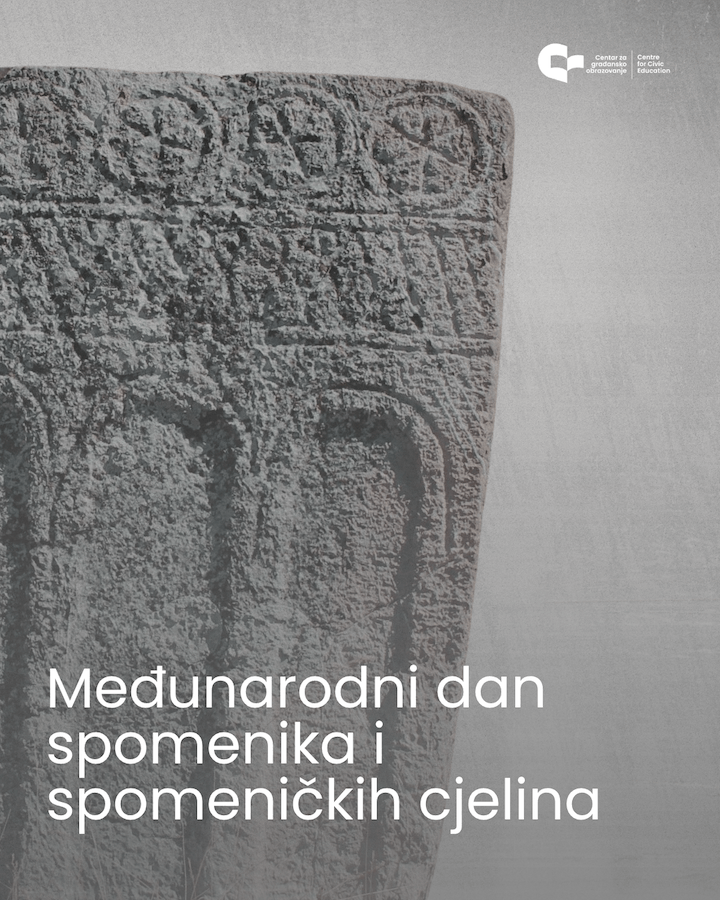
Montenegro has approximately 2,000 protected cultural properties entered in the official Register of Cultural Heritage. Six elements of intangible heritage have protected status in Montenegro, while more than 200 additional elements have been identified as potential candidates for protection under the Law on the Protection of Cultural Heritage.
Several sites from Montenegro are included on the UNESCO World Heritage List. Among them is the Natural and Cultural-Historical Region of Kotor, inscribed in 1979, which combines medieval urban heritage with the unique landscape of the Bay of Kotor. Also included are stećci, medieval tombstones spread across Montenegro, Bosnia and Herzegovina, Serbia, and Croatia. The list also features Venetian fortifications from the 16th and 17th centuries, including the Kotor fortification system as part of the defensive complex of the Venetian Republic, representing an important example of military architecture of that period. In addition to cultural heritage, natural heritage is also protected, including Durmitor National Park, inscribed in 1980 and expanded in 2005.
During 2025, the Minister of Spatial Planning, Urbanism and State Property, Slaven Radunović, proposed a referendum on the status of Kotor in order to reassess whether UNESCO membership brings benefits to Montenegro. This move reflected a clear lack of understanding of the importance of world cultural heritage. Following strong public criticism, the initiative was not pursued further, although it cannot be ruled out that it may be raised again.
The Directorate for the Protection of Cultural Heritage stated that a monument to Chetnik commander Pavle Đurišić was illegally erected within a protected cultural site, the 13th-century Đurđevi Stupovi Monastery, and that the Eparchy of Budimlja-Nikšić is responsible for this act. However, an adequate response from the police and prosecution was lacking, and the current location of the monument remains officially unknown.
CCE believes that Montenegro must protect its cultural heritage responsibly and consistently at all levels, while strengthening institutional capacities for its preservation. The Ministry of Culture and Media must pay particular attention to this issue and demonstrate zero tolerance for the misuse of Montenegro’s cultural heritage. The approach to cultural heritage must not be ideologically driven, but based on the laws of Montenegro and international standards.
This day was established by the International Council on Monuments and Sites (ICOMOS) on 18 April 1982 and approved by UNESCO in 1983, with the aim of raising awareness of the diversity of world heritage and the importance of its preservation and protection.
Sara Čabarkapa, Active Citizenship Programme Coordinator