
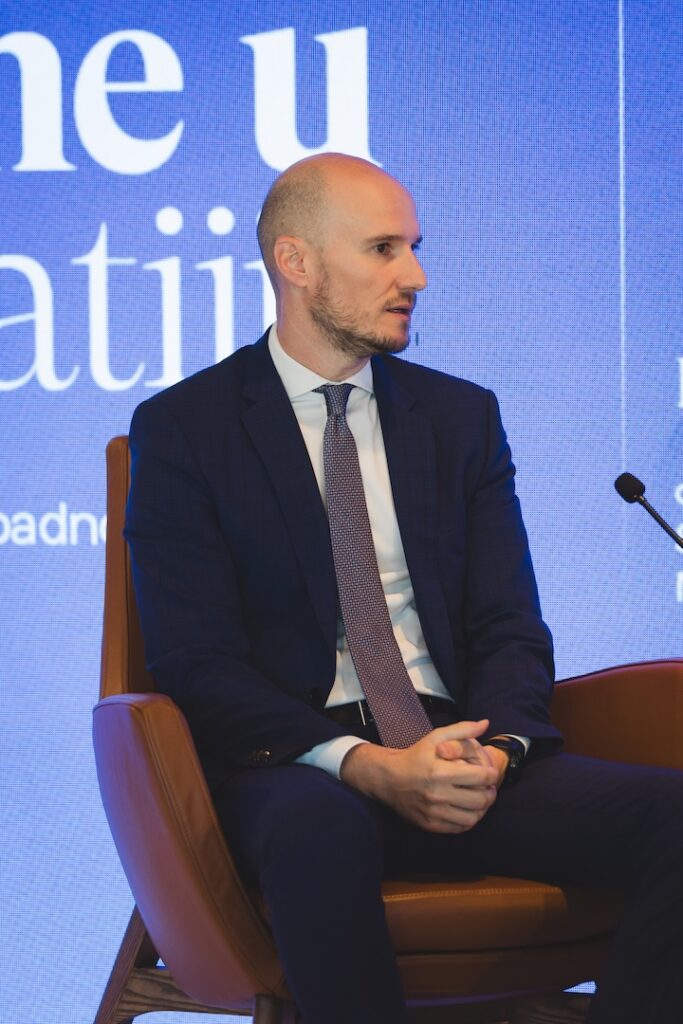
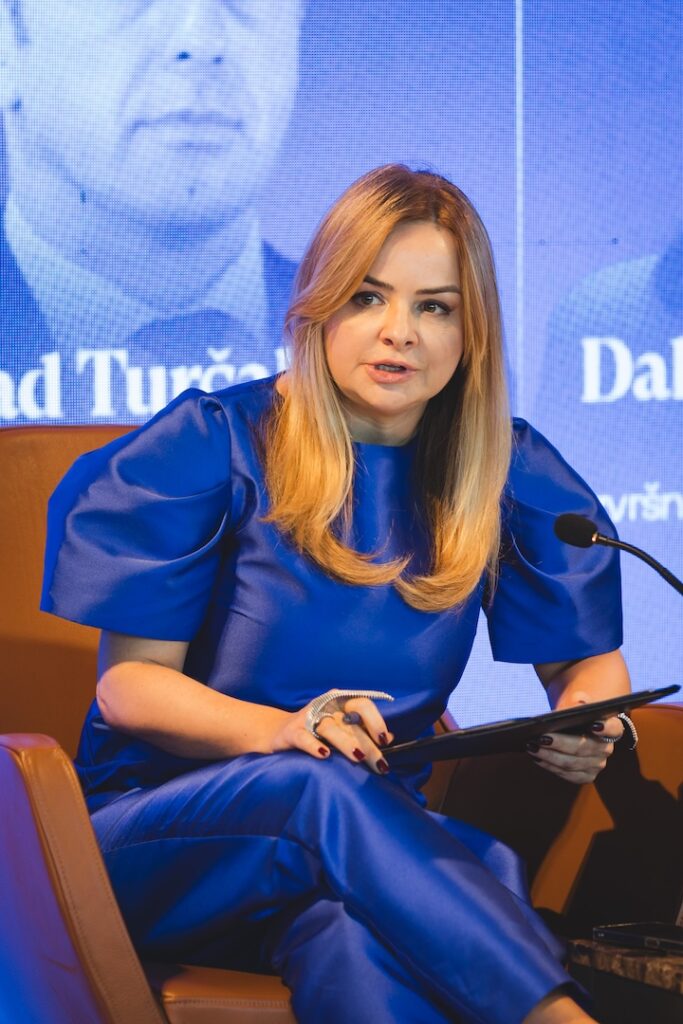
Twenty years after the restoration of independence, Montenegro has achieved significant state-building, security, and foreign policy successes, but it has not yet fully developed functional institutions, the rule of law, or a democratic political culture. Therefore, European integration must not be reduced to the technical closure of negotiating chapters, but must instead serve as a process of profound transformation of both the state and society. This is one of the conclusions of the analysis “Two Decades of Restored Montenegrin Independence: Between State-Building Success, Incomplete Democratization, and the Final Stage of European Integration”, published by the Heinrich Böll Foundation (HBS). The analysis was authored by Daliborka Uljarević, Executive Director of the Centre for Civic Education (CCE), and Balša Božović, Executive Director of the Regional Academy for Democratic Development (ADD), who are also members of the HBS Western Balkans Strategic Group.
The analysis finds that, two decades after 21 May 2006, Montenegro has preserved peace, strengthened its international standing, become a member of NATO, and advanced further than any other country in the region in negotiations with the European Union. The independence referendum is assessed as one of the most demanding and most successfully conducted democratic and peaceful processes of resolving a statehood question in a region marked by wars, ethnic divisions, and authoritarian legacies. It also emphasizes that the restoration of independence was not the product of a single political moment, but rather the result of a long process of social and political maturation, the strengthening of the anti-war and civic movement, the gradual expansion of the pro-sovereignty bloc, and the need for Montenegro to decide independently on its own future. The year 1997 is highlighted as a turning point in Montenegro’s political departure from the policies of Slobodan Milošević and the Greater-Serbian nationalism of the 1990s, marking the beginning of the country’s substantive state emancipation.
With 55.5% support for independence, the citizens of Montenegro chose, democratically and with dignity, a European future and the right to independently determine their political, security, and international position. At the same time, the referendum had a strong emancipatory and civic character, as it was based on the idea of Montenegro as a state of all its citizens, rather than a state of one nation, one party, or one identity. “From the historical distance of two decades, it is clear that 21 May was much more than a decision on state status. It was a geostrategic and civilizational turning point that permanently reoriented Montenegro toward the West, European integration, and a democratic model of development,” the authors state.
A special place in the analysis is devoted to Montenegro’s NATO membership in 2017, which is assessed as the culmination of its security and geopolitical repositioning and as a lasting institutional guarantee that decisions on its statehood and future will no longer be made outside democratic institutions.
At the same time, the authors point out that the greatest deficit of the post-referendum period has been the absence of deep democratic consolidation. Instead of depoliticizing the judiciary, public administration, education, and the security sector, the dominant model of party control largely continued. This meant that an opportunity was missed for 21 May to become the beginning of the institutional emancipation of society, rather than merely a confirmation of state independence.
The analysis stresses that preserving the civic model of the state is one of the most important achievements of post-referendum Montenegro, but also that this very concept is now under serious pressure through the rise of identity-based divisions, ethno-political bargaining, hate speech, revisionism, and attempts to relativize Montenegrin identity, the anti-fascist legacy, and the secular character of the state. “This is not merely a question of identity or history, but of the character of the state and its long-term institutional survival,” the authors warn.
Political changes after 2020 are recognized as democratically necessary, but also as the beginning of a new phase of political and social struggle over Montenegro’s identity, values, and geopolitical orientation. Particular tensions were caused by the issue of the Fundamental Agreement with the Serbian Orthodox Church (SOC), the position of religious communities, and the 2023 population census, while the concept of the “Serbian World” is identified as a framework that may contribute to weakening the civic model of the state. “Political developments after 2020 therefore reveal a dual reality: although the democratic change of government represented a necessary correction within Montenegro’s political system, it simultaneously exposed unresolved structural weaknesses and reopened debates that many believed had already been settled,” Uljarević and Božović state.
Despite these pressures, the analysis notes that the results of the 2023 census show that Montenegrin identity has remained stable and socially relevant. However, it also warns that a significant part of political and media structures in Serbia still does not accept Montenegro as a fully equal and sovereign state, seeking through various forms to preserve political influence and weaken its European path.
“The paradox of contemporary Montenegro lies precisely in the fact that the state is formally moving closer to the EU, while simultaneously facing internal democratic regression and challenges to certain foundations of its modern statehood, including from parts of the ruling structures themselves. Therefore, Montenegro’s European path depends not only on the closure of negotiating chapters, but also on society’s ability to restore a minimum consensus around the civic character of the state, European values, and democratic rules,” Uljarević and Božović assess.
The authors recommend three interconnected directions for future public policies: institutional consolidation and the rule of law; protection of the civic character of the state and strengthening of social cohesion; and understanding European integration as a process of the state’s internal transformation. This includes depoliticizing institutions, protecting the secular and civic character of the state, improving education policies and the culture of remembrance, protecting minorities, and developing media literacy and resilience to harmful external influences.
“Twenty years after 21 May, the question is no longer whether Montenegro has survived as a state, but what kind of state it wants to build. Independence has been confirmed both internationally and among its citizens. What remains open is whether its final stage of European integration will be accompanied by stronger institutions, greater social cohesion, and consistent rule of law. The answer to that question will determine not only the pace of European integration, but also Montenegro’s democratic strength, resilience, and future character,” the authors conclude.
Rozana Vuljaj, Project Assistant