
Xenophobia is neither inevitable nor a permanent feature of societies, but rather a changeable phenomenon shaped by political, economic, and educational contexts. Overcoming it requires strengthening the education system, developing media literacy and critical thinking, as well as greater accountability of political actors and the media. Without continuous public dialogue and addressing these issues, there can be no substantive progress in the societies of the region. These were some of the key messages from the programme Građanski ugao, broadcast on TV E, produced by the Centre for Civic Education (CCE). The discussion was moderated by Zvezdana Kovač, Director for Strategy and Communications at CCE, with guests Biljana Maslovarić from the Faculty of Philosophy of the University of Montenegro, Asim Mujkić from the Faculty of Political Sciences of the University of Sarajevo, and Dragoljub Draža Petrović, editor-in-chief of the Serbian daily Danas.

The discussion highlighted that the Balkans have historically been a space of encounters between different cultures, religions, and peoples, but also of frequent conflicts, which continue to shape attitudes towards the “other” and the “different”. The contemporary context of migration was also emphasised, noting that more than 110 million people worldwide are currently forcibly displaced, while the Western Balkans remains a transit route with several thousand migrants and refugees present at any given time.
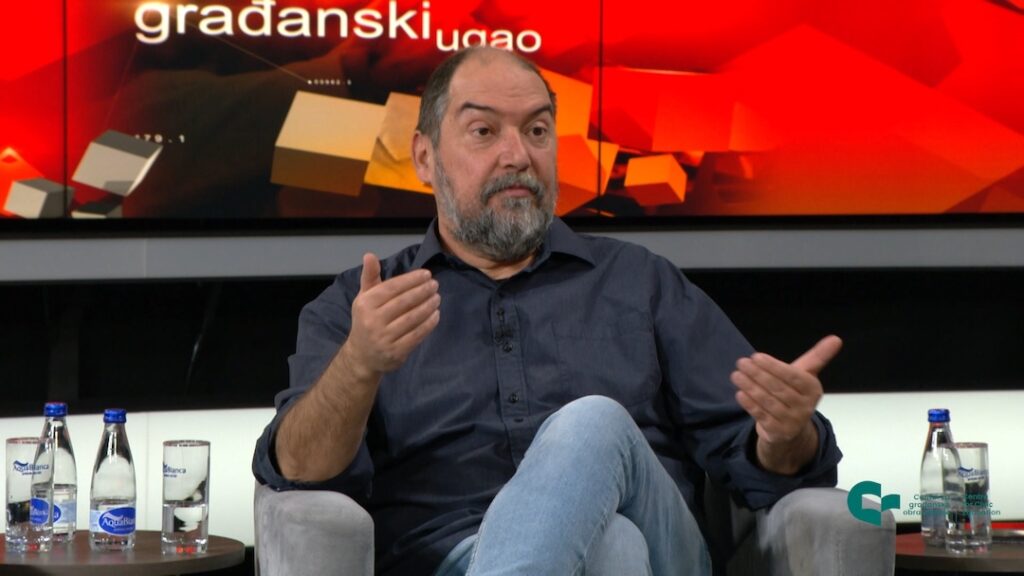
“This is a part of the world that has learned to live together, not in the form of tolerance as it is often promoted today. When you tolerate something, you do so from a position of power, allowing what is not perceived as a threat to follow ist own norms. Here, across different periods, we have learned to accommodate and reconcile our diverse interests. It is an incredibly rich tradition, for which, unfortunately, I do not see sufficient political strength today to bring it forward,” noted Mujkić, reflecting on the region’s historical capacity for coexistence and ist current political deficit. He also warned that this tradition has been suppressed by long-standing nationalist influences, which have fuelled xenophobic attitudes.
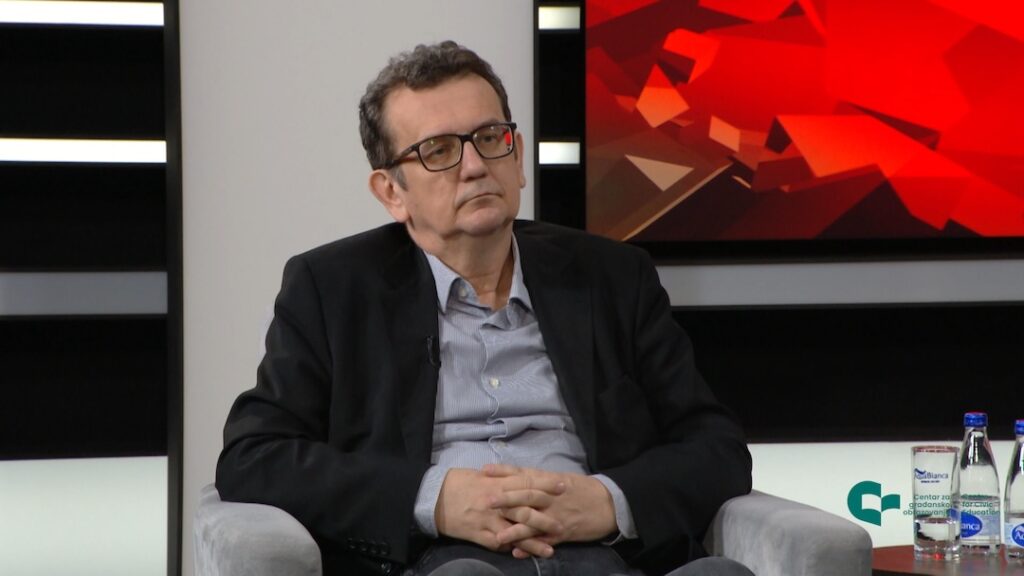
Petrović pointed to deeply rooted patterns of thinking that contribute to xenophobia. “There is a persistent mindset among Balkan societies that someone else is always to blame for what happens to us. According to conspiracy theorists, the wars were orchestrated by foreign actors who wanted to break up Yugoslavia, with local populations merely drawn into it,” he said, illustrating this with contemporary examples from Serbia. “You have narratives promoted by the authorities that a ‘colour revolution’ has been underway for months, allegedly driven by foreign actors aiming to destabilise Serbia. On the other hand, you also have claims that political leaders are who they are because of their ethnic background. There is always a certain distance towards foreigners, and elements of xenophobia on all sides,” Petrović added.
“I think that the situation has somewhat stabilised compared to 2015, when migration flows peaked. Migrants have, to some extent, become part of our everyday reality. They deliver food, bring meals to your door, and have found a place in society, although a degree of xenophobia persists, particularly on social media,” Petrović noted speaking about migrants and ambivalent relation of the society. In that In this context, he also warned about the dangers of disinformation, which can incite incidents.
Maslovarić explained how xenophobia develops through social and psychological mechanisms. “It often begins with gossip – something seemingly small and insignificant. From there, through labelling, we gradually exclude those we speak about, through laws and practices, which can lead to discrimination, and in its most extreme form, to genocide,” she said, stressing the importance of education as a tool for overcoming divisions. “When we emphasise through the education system that we are all human, that becomes the core of identity. That is why I believe so strongly in education – it is the most powerful lever for change,” she added.
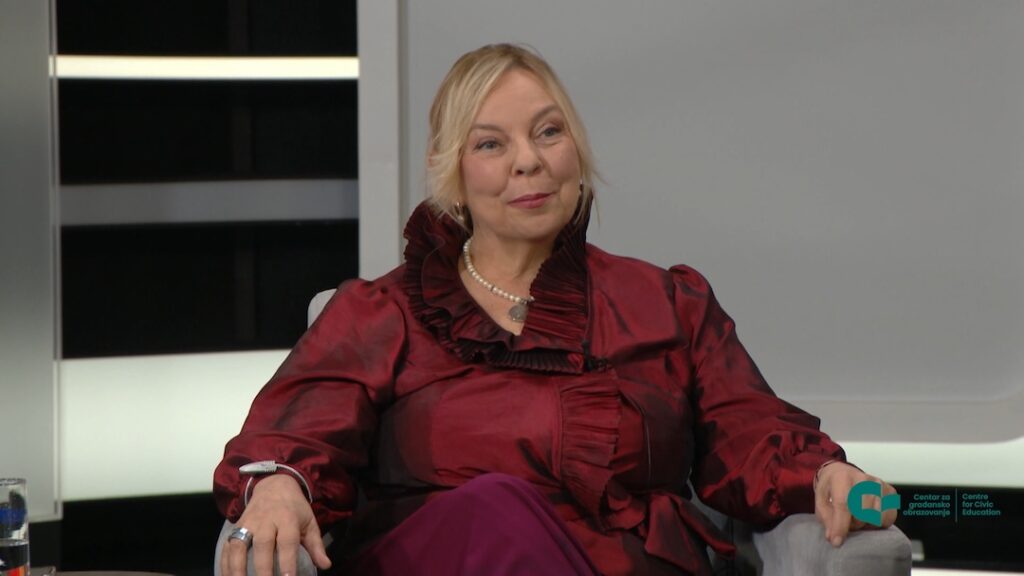
Maslovarić also raised the issue of political accountability. “If I had to identify those most responsible for the current situation in society, it would be political actors. We need a shift in paradigm in which politicians are expected to solve societal problems,” Maslovarić assesed.
Mujkić further elaborated on the role of political elites, noting that xenophobia is often used as a tool of manipulation. “It is remarkable how the issue of migration has been instrumentalised, ethnicised, and misused for political mobilisation. It always targets those who cannot respond, those towards whom one can feel a sense of superiority,” he explained.
He also pointed to the continuity of political interests from the post-war period, noting that many of those currently in power benefited from the events of the 1990s. “Despite all the talk of European integration and the rule of law, they have no intention of relinquishing these positions. That is why they maintain a necessary level of hostility and narratives based on fear of the ‘other’, in order to ensure that nothing fundamentally changes,” Mujkić added.
“The media are a significant part of the problem, particularly dominant outlets in Serbia, where hate is often embedded in editorial policy. They fuel divisions and conflicts, prioritising sensationalism,” Petrović noted when discussing the role of the media.
Despite numerous critical assessments and warnings about deeply rooted xenophobic patterns, the speakers also pointed to opportunities for change, primarily through education, critical thinking, and civic engagement.
“At the core of human nature lies the potential for good, but it is often suppressed by social circumstances. That is why education and open dialogue are essential to activate that potential. The education system, together with culture, can drive meaningful change. Programmes like this are small but important steps forward. As long as we remain silent, there can be no progress,” Maslovarić concluded.
Mujkić emphasised the need for a balanced understanding of human nature, noting that neither purely optimistic nor pessimistic views are sufficient, and that social context and education play a decisive role. “If it is an illusion to believe that we are inherently good, it is equally an illusion to think that we are inherently evil,” he explained.
The interlocutors also stressed that, despite the strong influence of nationalist narratives and political manipulation, there are examples demonstrating that cooperation and overcoming divisions are possible. “I remember 1996. The weapons had barely fallen silent, yet markets had already emerged along dividing lines in Bosnia, where people who had previously been in conflict began communicating and trading with one another,” Mujkić recalled.
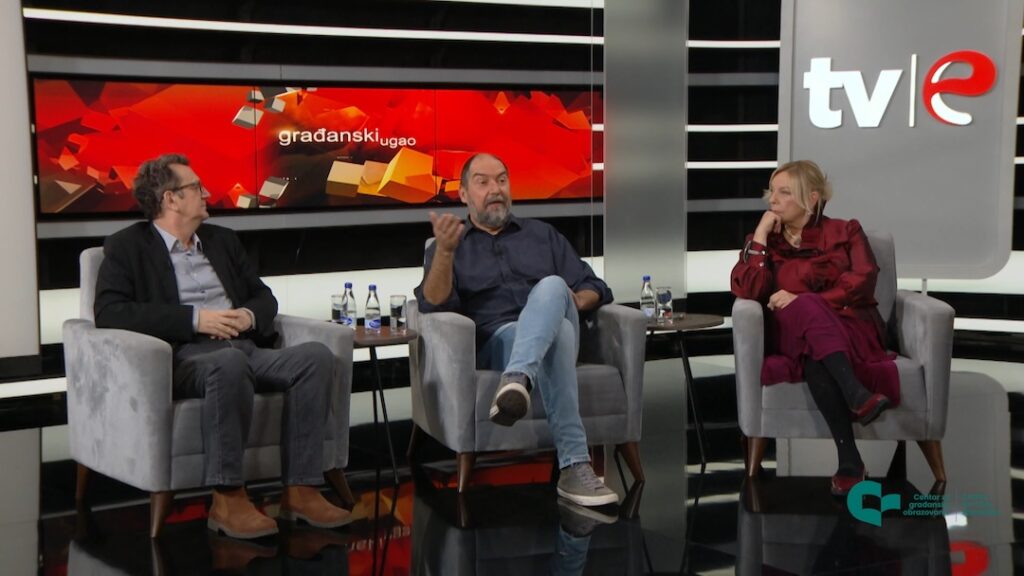
The full programme is available at: https://www.youtube.com/watch?v=L5bU_813yTs
The programme is part of the project “Common Imprints of Diversity”, financially supported by the Fund for the Protection and Realisation of Minority Rights of Montenegro. The content of the programme is the sole responsibility of the participants.
Maja Marinović, Programme Associate