
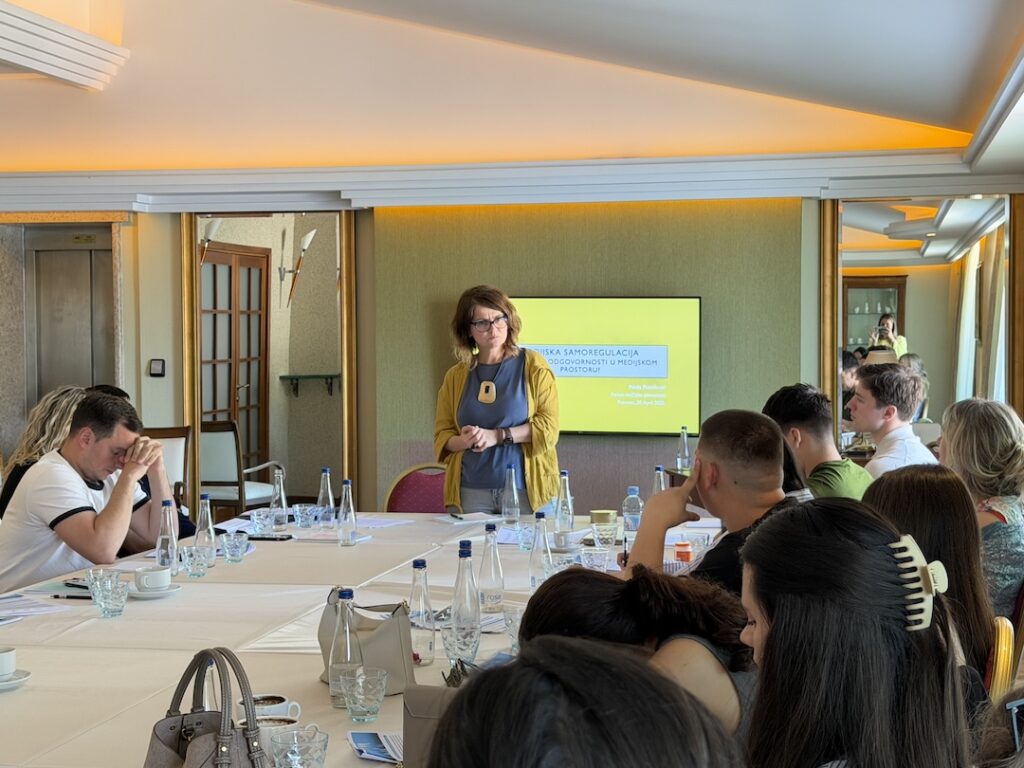
Developing media literacy among young people is essential for helping them responsibly navigate today’s digital environment , recognize disinformation, and understand how media shape public opinion. This was the key message of a three-day Media Literacy Forum organized by the Centre for Civic Education (CCE).
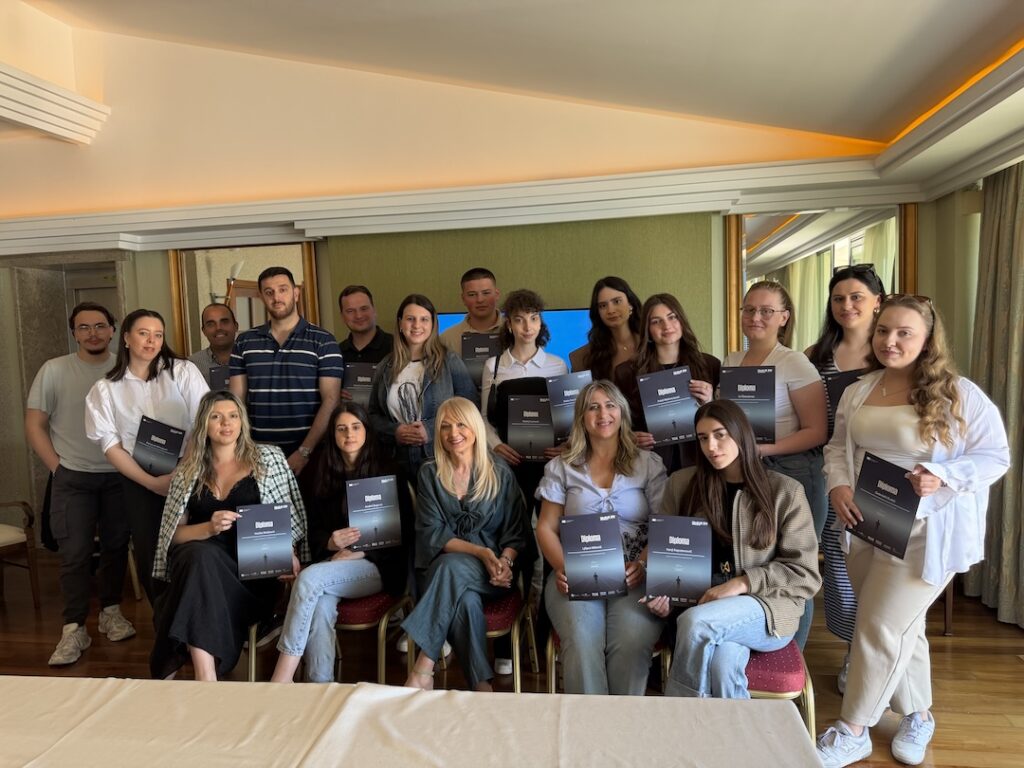
The forum brought together 22 young participants from eight municipalities: Podgorica, Danilovgrad, Bijelo Polje, Nikšić, Tuzi, Kotor, Budva, and Tivat. Through interactive sessions, workshops, and discussions with experts from various fields, they had the opportunity to develop critical thinking skills and learn how to use media responsibly.
During the program, participants explored different aspects of the media landscape, from how news is produced and narratives are shaped to identifying disinformation, manipulation, and fake news. They also examined the role of social media and algorithms in shaping the information we consume every day. The forum placed a strong emphasis on practical skills, including interviewing techniques, fact-checking and source verification, as well as understanding ethical standards and responsibility in the media.
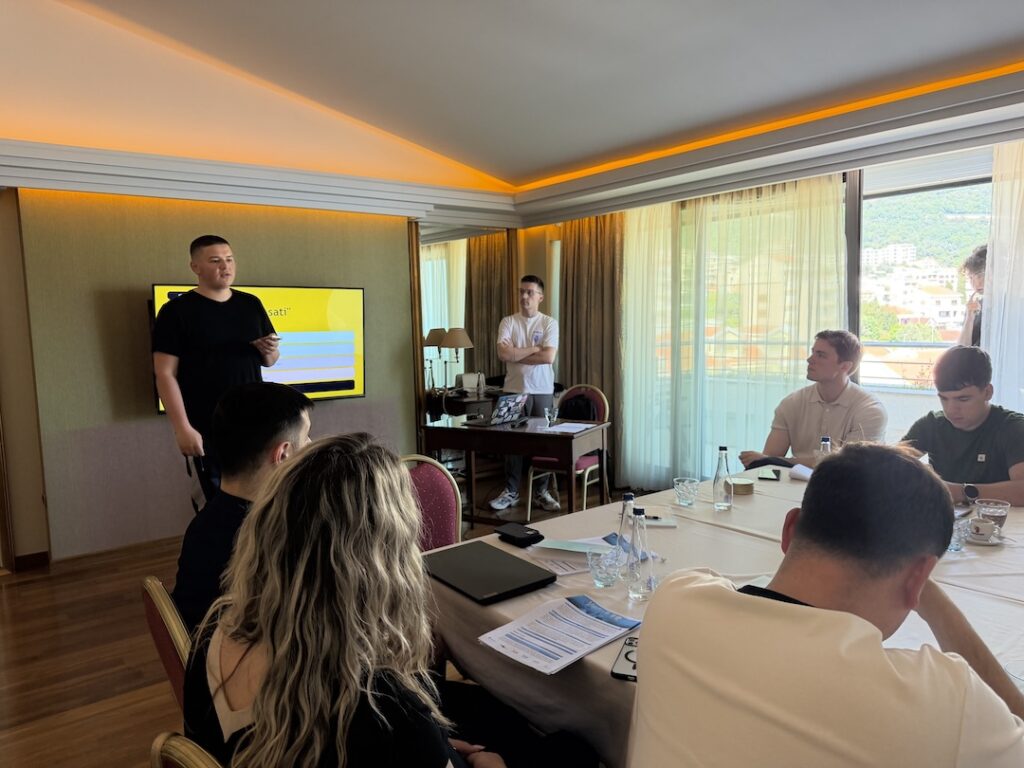
“Participants showed exceptional interest and a strong understanding of the topics, which contributed to a high-quality exchange of ideas. While a single lecture cannot change broader trends, it can open up space for further action, and forums like this often mark the beginning of future initiatives and continued work on strengthening media literacy,” said Damir Nikočević, Public Relations and Project Management Officer at the Agency for Audiovisual and Media Services, who led one of the sessions.
Journalist and former Director of Television of Montenegro Vladan Mićunović shares a similar view: “In a time of hyperproduction of false and manipulative news, it is important to develop a critical approach to information and recognize unreliable content. It is especially encouraging that young people increasingly recognize the scale of this problem and show a high level of engagement and readiness for discussion.”
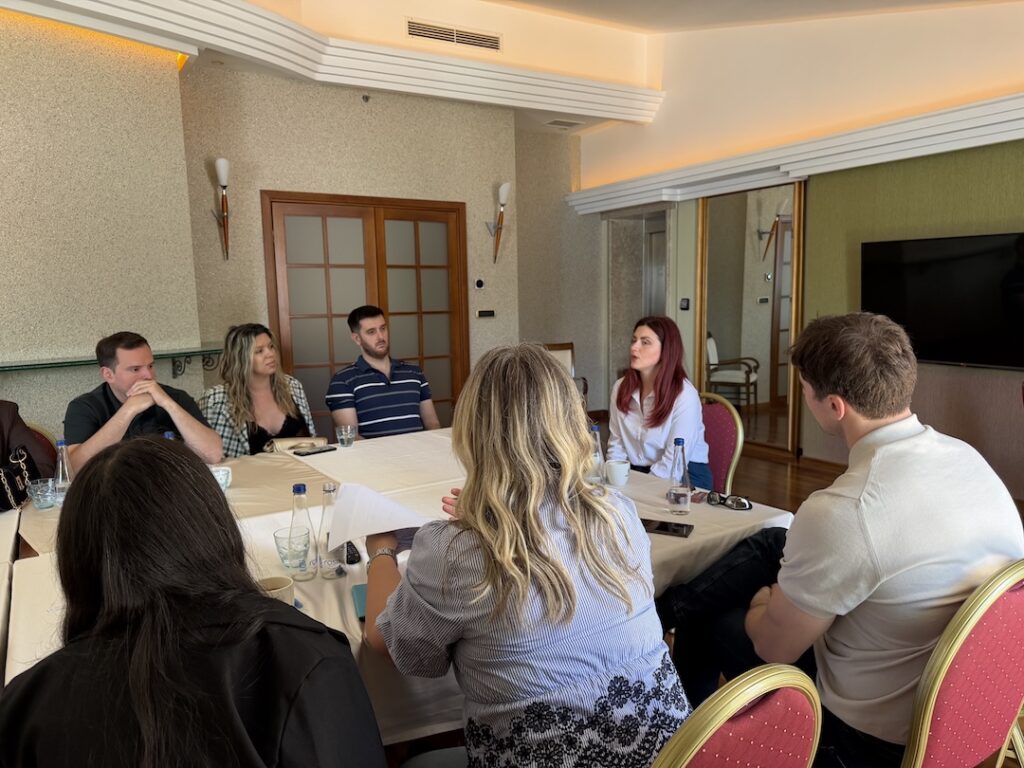
Forum participants noted that the program enabled them to view the media from a different perspective and develop more concrete skills for navigating the digital environment.
“The Media Literacy Forum is a valuable opportunity to exchange knowledge and experiences, especially at a time when critical understanding of information is of crucial importance. Programs like this contribute to strengthening media literacy and developing a responsible and informed society,” said Ivan Vučeković, a master’s student in international law and independent advisor at the Ministry of Maritime Affairs, based in Podgorica.
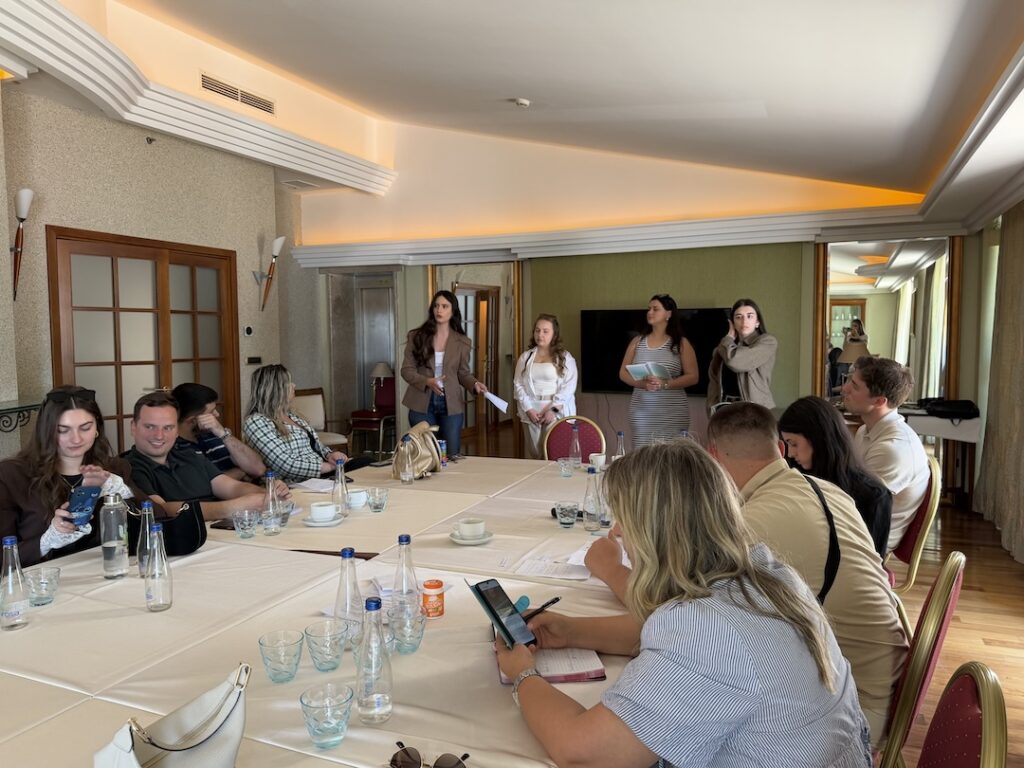
“During the forum, I became even more aware of how important it is to approach information critically and verify sources before sharing them. I plan to apply this knowledge in everyday life through more responsible use of social media and better recognition of manipulative content,” said Adela Mahmutović, a student at the Faculty of Legal Sciences from Bijelo Polje.
Biljana Bulajić from Tivat said that she was motivated to participate by “a desire to better understand how the media influence people’s opinions, as well as how to recognize reliable information and protect oneself from disinformation and manipulation.”
“The lecture on freedom of expression through the case law of the European Court of Human Rights left the strongest impression on me, as it clearly showed how a balance is established between freedom of speech and the protection of other rights,” said Filip Davidović from Podgorica.
The Media Literacy Forum was organized as part of the MEdIA – Lit project (Advancing Media and Information Literacy for Democratic Participation), implemented by CCE in partnership with the Helsinki Committee for Human Rights in Serbia, the Helsinki Committee for Human Rights in North Macedonia, the Tirana Centre for Journalism Excellence in Albania, and the Atlantic Initiative in Bosnia and Herzegovina. The project is funded by the European Union, with co-financing from the Ministry of Regional Investment Development and Cooperation with Non-Governmental Organizations of the Government of Montenegro.
Aleksandra Mihaljević, Project Assistant