
Three decades after the wars of the 1990s, post-Yugoslav societies have still not developed a sustainable relationship with the past, while memory politics remain predominantly ethnocentric, selective, and vulnerable to political instrumentalisation. Without acknowledging all victims, respecting facts established by courts, and fostering a culture of remembrance, these societies risk perpetuating cycles of division and future conflict. These were the key messages from the latest PROUDCAST of the Centre for Civic Education (CCE), in which Željka Zvicer, Programme Associate at CCE, spoke with Bekim Blakaj, Executive Director of the Humanitarian Law Center Kosovo (HLCK), and Olga Kavran, Executive Director of IUSTICOM and former spokesperson for the Office of the Prosecutor of the International Criminal Tribunal for the former Yugoslavia (ICTY).
The speakers warned that memorialisation processes across the region generally do not contribute to reconciliation, but instead often deepen existing divisions, as victims continue to be viewed primarily through the lens of ethnic affiliation rather than universal human rights and individual suffering.
“Unfortunately, memorialisation is one-sided, ethnocentric, and fails to respect all victims,” said Blakaj, stressing that many memorials have been erected without institutional accountability and without recognising all those who suffered. As an example, he cited the memorial dedicated to victims of the NATO bombing of a bus near Podujevo, where some of the victims were Serbs, including children, yet their names were omitted from the memorial plaque. “Such narratives do not reflect the facts, and new generations can easily develop a distorted understanding of what happened during the war,” he warned.
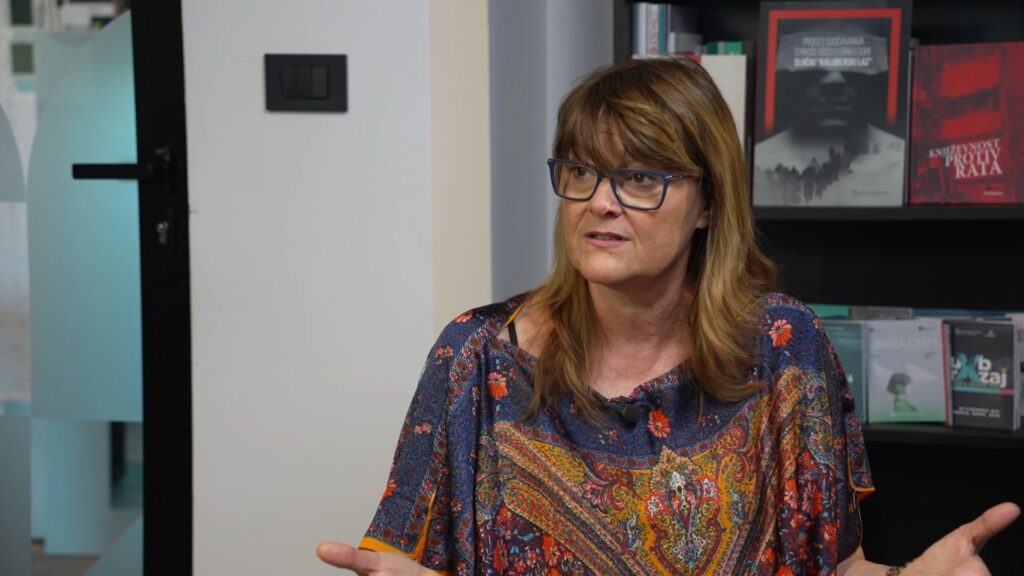
Speaking about societal attitudes towards ICTY judgments and judicially established facts, Olga Kavran assessed that the region today demonstrates even stronger resistance to accepting facts than it did two decades ago.
“The propaganda that denies facts established before the ICTY is so powerful that people today know less about those facts than they did 20 years ago,” explained Kavran, pointing to the continued relativisation of war crimes through media narratives and political discourse.
According to her, criminal proceedings alone are not sufficient for societies to undergo a genuine process of transitional justice. “The wars in the former Yugoslavia are probably the most prosecuted wars in modern history when it comes to international criminal law, yet 27 years later we have realised that this is not enough,” Kavran noted. She further warned that insisting on narratives of “exclusive victimhood” ultimately generates new forms of violence and intolerance. “When people live under the illusion that they are only victims, they can eventually begin to behave like perpetrators,” she added.
Part of the discussion focused on the importance of documenting facts and personalising victims. Blakaj emphasised that one of the key objectives of the Humanitarian Law Center Kosovo was to ensure that “every number receives a name and a surname.”
“For families, being recognised as victims is often just as important as justice itself. People frequently feel forgotten and unacknowledged, particularly in smaller communities,” said Blakaj.
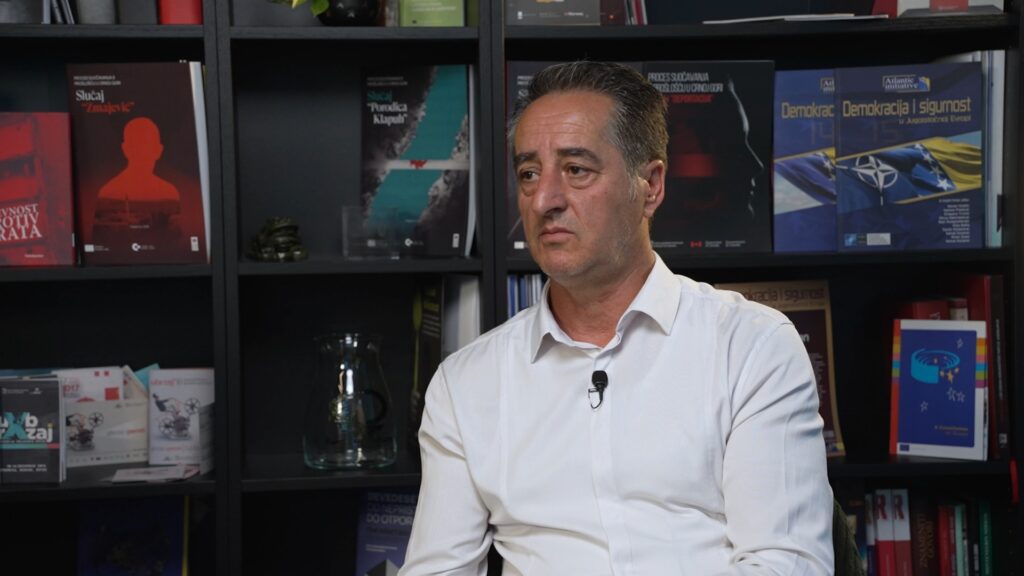
He also spoke about the experience of a memorial exhibition dedicated to children killed during the war in Kosovo, which, according to him, demonstrated that empathy among communities can still exist when victims are presented as human beings rather than political symbols. Blakaj recounted an encounter between an Albanian visitor who had lost family members during the war and the parents of a Serbian boy killed in the conflict. “He approached them and said: ‘I am sorry for your son. No child should share the fate of our children.’ These are the moments that show how important it is to humanise victims and create space for empathy,” he noted.
Addressing regional cooperation, Blakaj recalled the RECOM Initiative, which brings together civil society organisations and victims’ families from across the former Yugoslavia with the aim of establishing a Regional Commission to determine the facts about war crimes and other serious human rights violations committed on the territory of the former Yugoslavia between 1991 and 2001. Although the initiative failed to secure the necessary political support from all governments in the region, the speakers agreed that a regional approach to dealing with the past remains essential.
Kavran argued that political elites across the region deliberately sustain divisive narratives because they facilitate political manipulation. “As long as there is an enemy to point a finger at, people pay less attention to the economy, corruption, and the everyday problems they face,” she concluded.
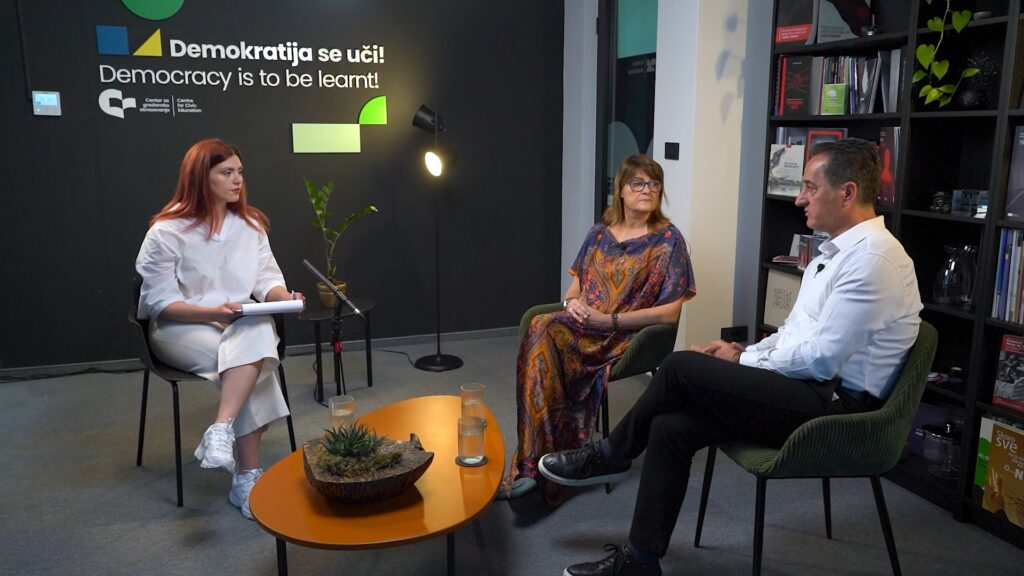
The speakers agreed that lasting peace and trust among societies in the region cannot be achieved without open dialogue, fact-based education, institutional accountability, and the inclusion of all victims in memorialisation processes.
The full PROUDCAST is available at: https://youtu.be/OZdsCmmPoYE?si=7tddgx2rqbwvPLXY.
This PROUDCAST was produced within the framework of the CCE project “Understanding the Past to Build Trust and Advance Transitional Justice”, implemented as part of the regional programme “EU Support to Confidence Building in the Western Balkans”, funded by the European Union and implemented by the United Nations Development Programme (UNDP). The views expressed in this episode are those of the speakers alone and do not necessarily reflect the views of CCE, the European Union, or UNDP, nor can they be regarded as their official positions.
Maja Marinović, Programme Associate