
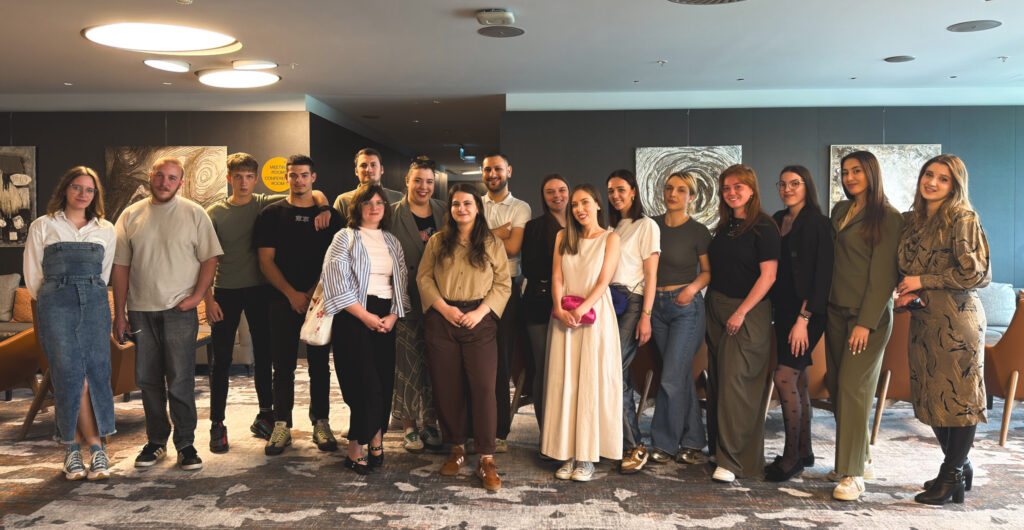
Today’s media landscape, in which the boundary between information and disinformation is constantly being blurred, requires a new generation of professionals ready for rapid changes and technological advancement, and media literacy is not only important for the audience, but also for those who work or plan to work in the media, it was stated at the training on professional journalism, innovative media tools and media literacy organised today, in Podgorica, by the Centre for Civic Education (CCE).
Through an intensive and interactive programme, 20 male and female students of social sciences, as well as young male and female journalists, had the opportunity to gain concrete knowledge through direct dialogue with experienced male and female journalists that will enable them in their future work to be not only faster and more innovative, but also consistent with the highest ethical standards of the journalistic profession.
“We live in a time of never more accessible information, but also manipulation. Therefore, the role of professional journalism is very important. It is not enough merely to convey information, but it is necessary to understand the context, verify facts, recognise disinformation and preserve professional and ethical standards in a highly demanding digital environment”, stated Daliborka Uljarević, Executive Director of CCE, opening the programme. “Critical thinking, responsible use of digital tools and the ability to distinguish facts from manipulation are becoming key democratic skills”, she pointed out, explaining the reasons for which CCE conceived this programme.
On the basic principles of professional journalism today, the challenges of the digital environment and what it means to be a journalist today, Vladan Mićunović, former Editor-in-Chief of TV Vijesti and former Director of TVCG, spoke with the programme participants. This was followed by a session on the transformation of journalism in the digital era, media literacy as a professional skill and ethical challenges in journalism with Marija Arnautović, editor at TVE and a journalist with decades of experience in various newsrooms, including Radio Free Europe. The concluding session referred to recognising disinformation and fact-checking in journalistic work, alongside an analysis of concrete examples, and was led by Željka Zvicer, Programme Associate at CCE.
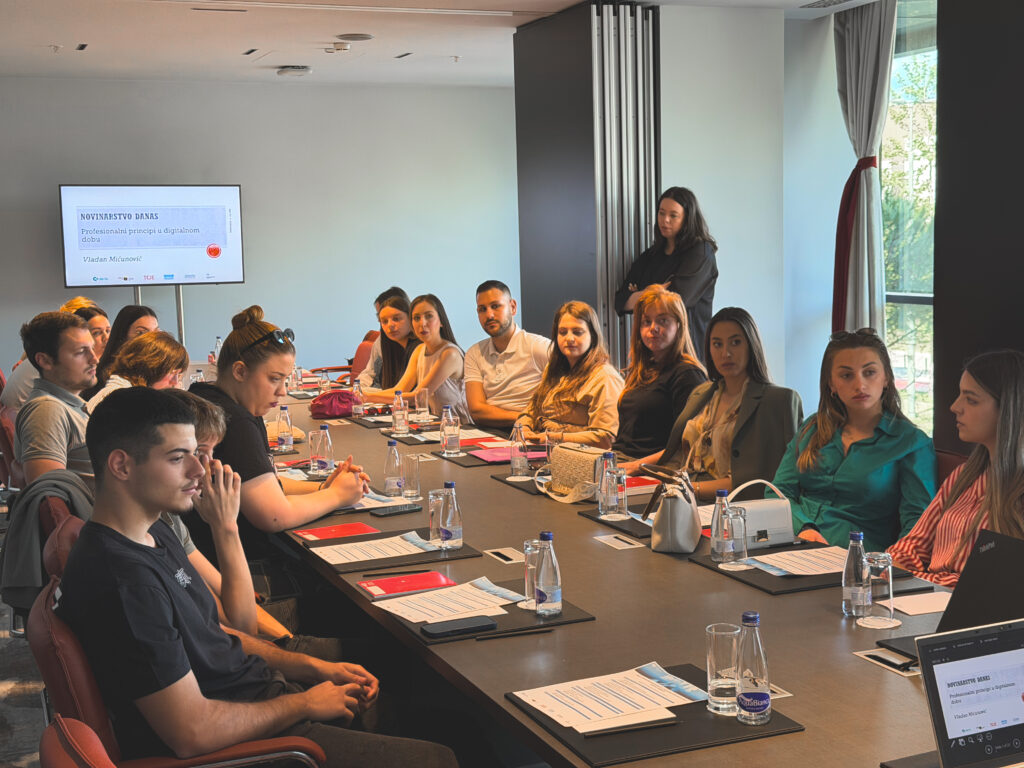
“For me, the part that referred to the consequences that media reporting may cause is particularly significant. This reminds us that every written or spoken word must be verified, contextualised and directed towards truthful informing of the public. In Montenegro and the region, we often witness propaganda content and disinformation, which is why it is important to nurture professionalism, and to establish ethical and objective reporting as the basic principle of journalism. These are the values we had the opportunity to hear about today from experienced professionals, which is invaluable for young journalists who are only building their professional path”, assesses Ivana Vlaović, journalist at TV Vijesti, who was one of the participants.
“As someone who has been engaged in journalism for three years, I believe that it is always important to recall the basic things and not forget how much responsibility we carry when we publish news and inform the public. Through an interesting practical part of the lecture, the experienced lecturers conveyed this to everyone, regardless of years of experience in this profession. Such programmes should be organised more often so that more young people would become involved in this demanding profession”, says Pavle Otašević, journalist at Antena M, who was also among the participants.
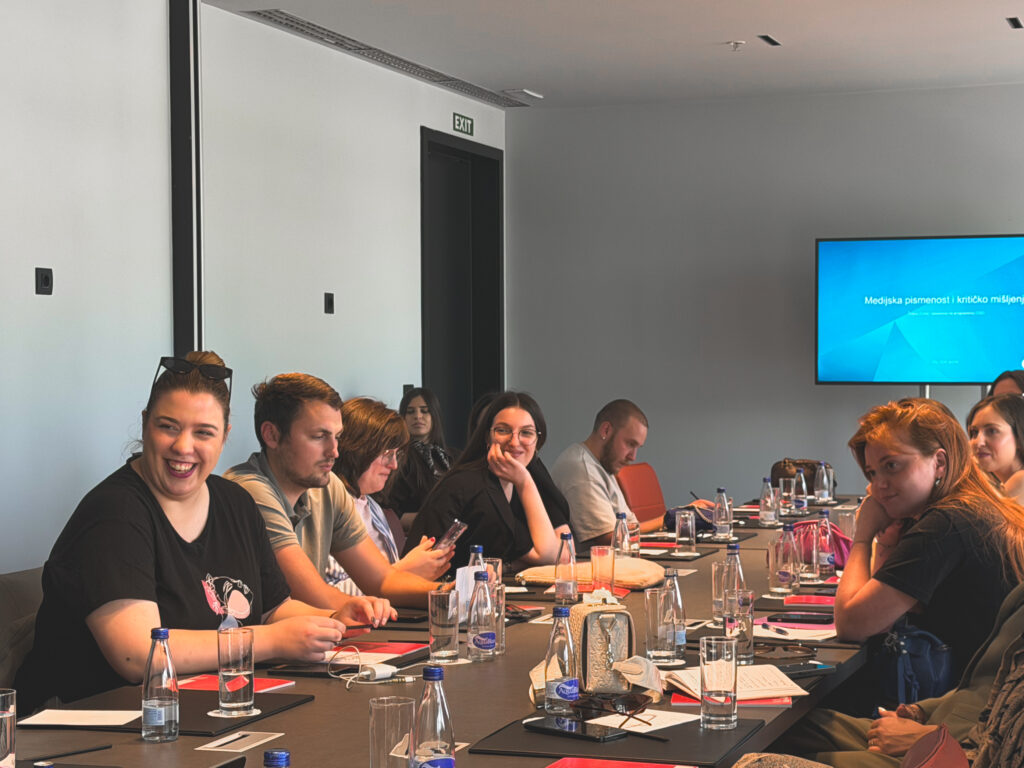
“I believe that the responsibility of journalists during reporting, especially when it comes to modern media, is of key importance. Taking into account the amount of content that is available on a daily basis, the role of journalists is increasingly complex, but the starting point is always the basic postulates on which journalism of the modern age must also be based,” concludes Anica Vujadinović, journalist at the CDM portal, who participated in this programme.
This training is part of the MEdIA – Lit project (Advancing Media and Information Literacy for Democratic Participation), implemented by CCE in partnership with the Helsinki Committee for Human Rights in Serbia, the Helsinki Committee for Human Rights in North Macedonia, the Tirana Centre for Journalism Excellence in Albania and the Atlantic Initiative in Bosnia and Herzegovina. The project is financed by the European Union, with co-financing from the Ministry of Regional-Investment Development and Cooperation with Non-Governmental Organisations of the Government of Montenegro.
Nikola Obradović, Programme Associate