
Interculturalism in the Western Balkans is not merely a political concept, but also a historical experience of shared life, as well as a space of continuous reflection. This was assessed in the programme Civic Corner on TVE, produced by the Centre for Civic Education (CCE). On interculturalism throughout history and today, its social and political dimensions, as well as the role of education, politics and the media in shaping narratives about diversity, Zvezdana Kovač, Director of Strategy and Communications at CCE, spoke with academics Šerbo Rastoder from Montenegro and Husnija Kamberović from Bosnia and Herzegovina, Irena Stefoska, historian and professor at Ss. Cyril and Methodius University in Skopje, and Dragan Popović, historian from Belgrade.

“Interculturalism is often suppressed by political interpretations. Shared life exists, especially among ordinary people. Regardless of what political elites may think, practices of cooperation and solidarity often take place outside dominant political narratives,” assessed Husnija Kamberović.
Šerbo Rastoder emphasised the distinction between multiculturalism and interculturalism, explaining that “interculturalism is the active coexistence of differences, while multiculturalism is a slogan.” He noted that the region has a strong multicultural heritage, but that contemporary societies do not always succeed in transforming that heritage into coherent public policies or a strategic approach, illustrating this with the example of Montenegro and the gap between social reality and institutional action.
Irena Stefoska pointed out that societies in the region are historically multicultural, but that the key issue is the transition to an intercultural phase, that is, from the passive existence of diversity to active interaction. “Interethnic coexistence is never a completed process and it is never a question that can be archived as definitively answered,” she warned.
“In the region, there has been a long-standing struggle over the interpretation of interculturalism, with nationalist ideologies influencing the shaping of political space. Their aim is to divide communities and instil fear in order to govern more easily,” said Dragan Popović, stressing that without democratisation of society it is not possible to develop intercultural practices. “In a system that is predominantly authoritarian, as is currently the case, for example, in Serbia, where you have a highly authoritarian government ruling through fear, creating divisions and fuelling hatred, there is not even space to discuss these issues,” he added.

The programme particularly emphasised that civic society and national identities are not mutually exclusive.
“Civic society cannot be built without freedom. Individual freedom and the freedom of identity represent complementary principles, not opposing concepts,” Kamberović noted.
Rastoder, however, warned that Balkan societies still have limited space for the development of civic society. “Civic society is about the individual, and without strengthening the role of the individual it is not possible to overcome the dominance of collective identities in the political sphere. Without being cynical, this is like when every opponent of Jews claims to have a Jewish friend, and here every opponent of someone else claims to have a friend from that community. That is folklore. The essence of life is something entirely different,” he explained.
Speaking about the political instrumentalisation of identity, and about how political elites often present themselves as the sole interpreters of identity issues, thereby consolidating power and deepening social divisions, Popović pointed out that “political elites position themselves as the only arbiters in identity matters and as the sole representatives of their communities,” assessing that this hinders open public debate.
Kamberović warned about pronounced narratives regarding the impossibility of shared life, which are, in fact, a harmful political construct. “Political elites construct narratives claiming that interculturalism is not possible, although everyday practice shows the opposite – continuous interaction, cooperation and exchange among communities,” he said.
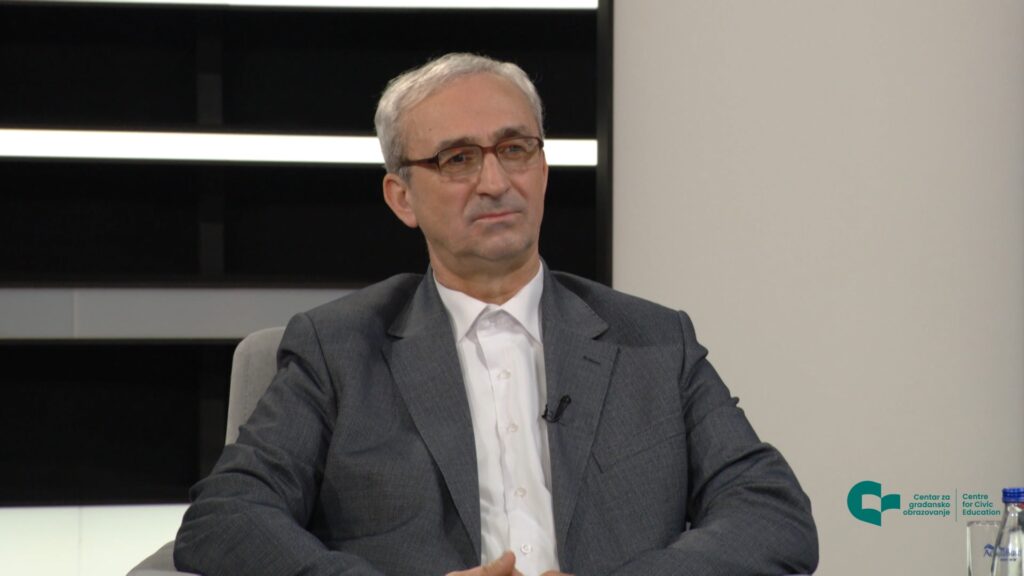
Speaking about the role of history in contemporary societies, Popović stated that the historical experience of shared life is not disputed, but that the key question is how that experience is interpreted and used today. “The question is how we transform that experience today, what we learn from it and to what extent we succeed in resisting revisionist narratives,” he warned, arguing that the past is interpreted selectively.
Rastoder believes that the past cannot be changed, but interpretations can. He pointed to the difference between scientific reinterpretation based on new evidence and the political imposition of interpretations, warning of the danger of instrumentalising history.
When asked about education as a key space for developing interculturalism, Stefoska indicated that everyday experiences of shared life are often not part of curricula, as the focus remains on national narratives, heroes and major events, which limits the development of intercultural understanding among young people. “We always, and rightly, emphasise political elites as holders of the greatest power, but let us not forget that political elites cannot do anything without intellectual elites, without media elites, and so on,” she underlined.
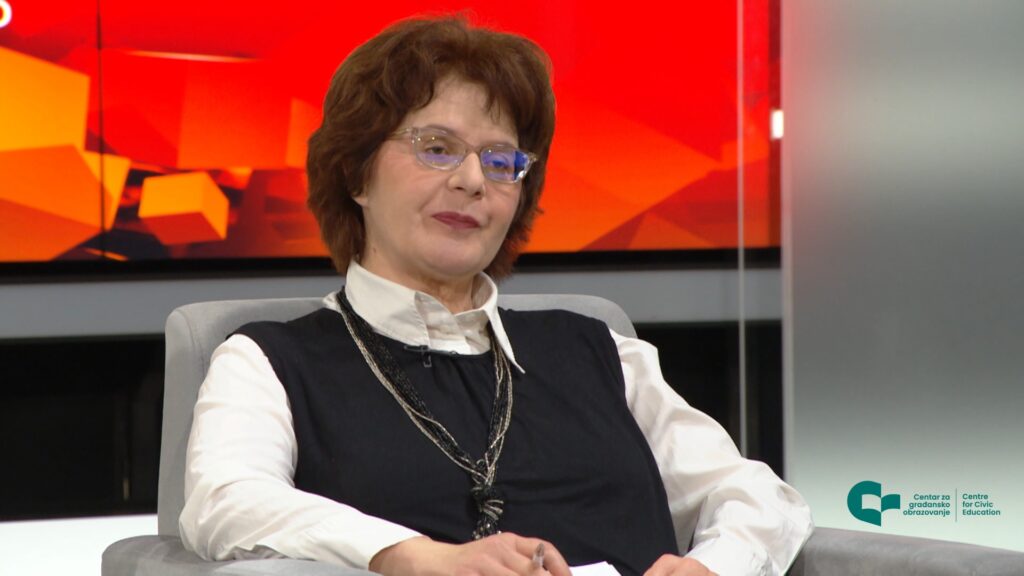
Speaking about historical examples, Popović stressed that cooperation and conflict are parallel processes in the region’s history. “The choice of what modern politics is built upon is a value decision of societies. Any region as mixed as ours naturally contains both conflicts and cooperation. It is up to you, as a serious and modern democratic society, to decide what you want to build your present and future upon. Emphasising conflicts as the dominant historical pattern represents a simplification that can have serious political consequences,” he said.
Reflecting on the experience of Yugoslavia, Kamberović recalled that the idea of shared life once existed and had tangible social effects. He noted that many individuals and communities within that framework achieved development and affirmation, but that later political processes demonstrated the fragility of that model and the strength of nationalist narratives that displaced it.
The interlocutors also addressed the issue of “mother states,” warning that such concepts may have destabilising potential, especially when used as political arguments in identity debates. It was emphasised that the question of loyalty to the states in which citizens live is crucial for the stability and development of civic society.
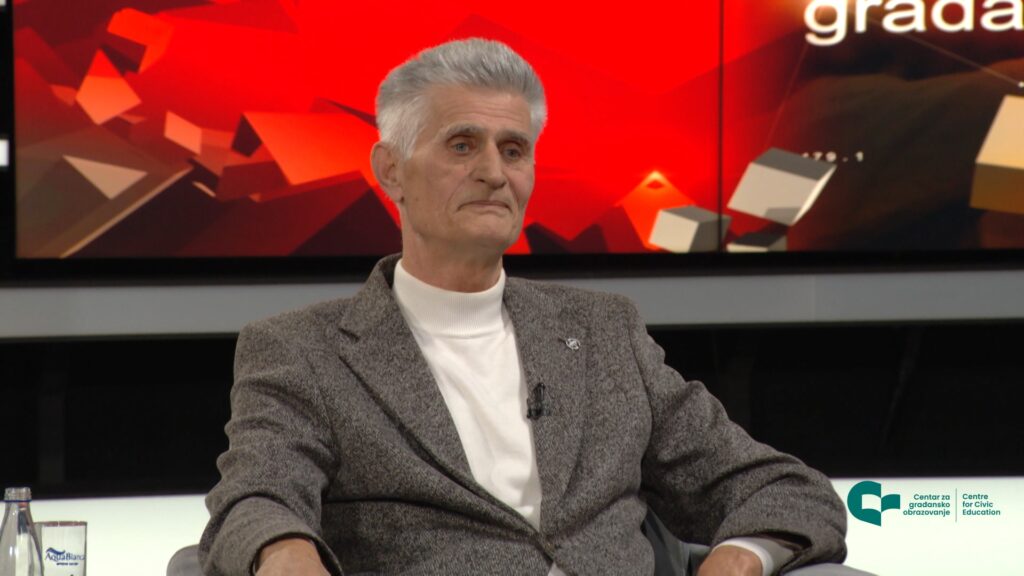
The full programme is available at: https://www.youtube.com/watch?v=3trW4AP-qmE
The programme is part of the project “Shared Imprints of Diversity”, financially supported by the Fund for the Protection and Realisation of Minority Rights of Montenegro. The content of the programme is the sole responsibility of the participants.