
Anđela Popović, Marta Borović, and Ena Božović, students of the Kotor Gymnasium and winners of the debate competition on the topic of peer violence organized by the Centre for Civic Education (CCE), stayed in Novi Sad from 20 to 22 March as part of a study visit awarded for winning first place. During the three-day programme, they gained new knowledge, encountered diverse perspectives, and further deepened their understanding of social processes.
Their stay in Novi Sad enabled them to become familiar with the work of institutions, important cultural and social content, as well as examples of civic activism, with significant support provided by the partner organization – the Regional Academy for the Democracy Development (ADD).
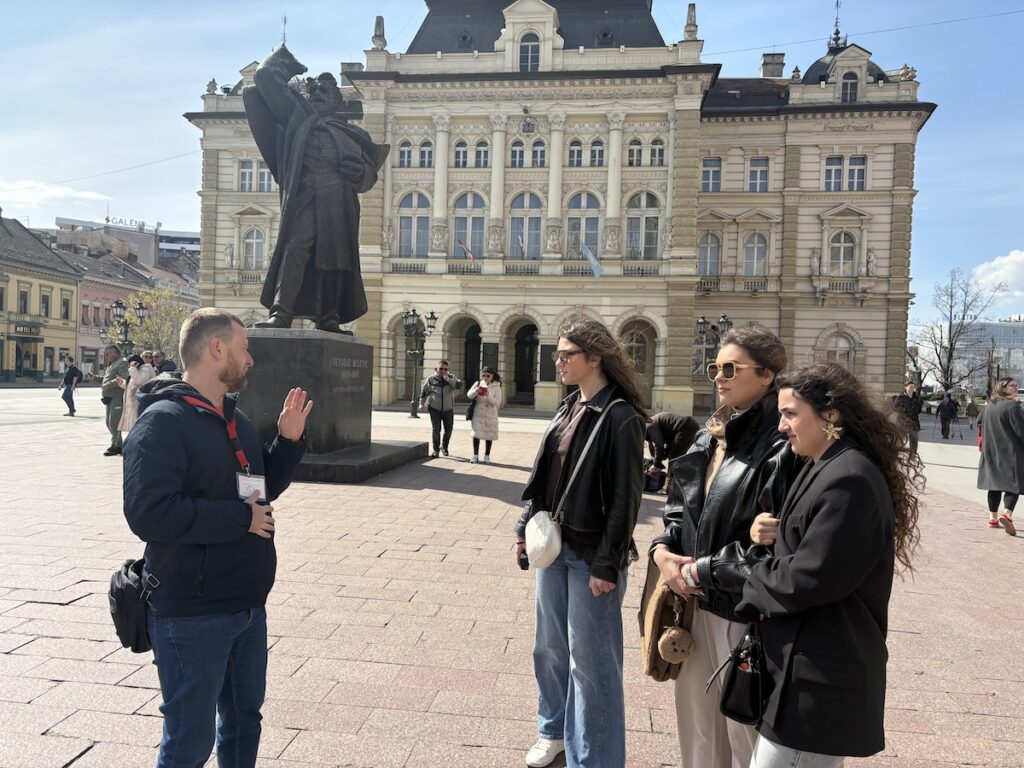
As part of the mme, a meeting was organized with Saška Radujkov, a member of the Assembly of the Autonomous Province of Vojvodina, during which they discussed the work and functioning of the provincial parliament, parliamentary activities, and the European perspective of the region.
“The study trip to Novi Sad was a valuable experience for us, as through various visits and meetings we had the opportunity to see and learn many new things. Every place we visited opened a different perspective and encouraged us to think about many topics more broadly and deeply than before,” said Marta Borović.
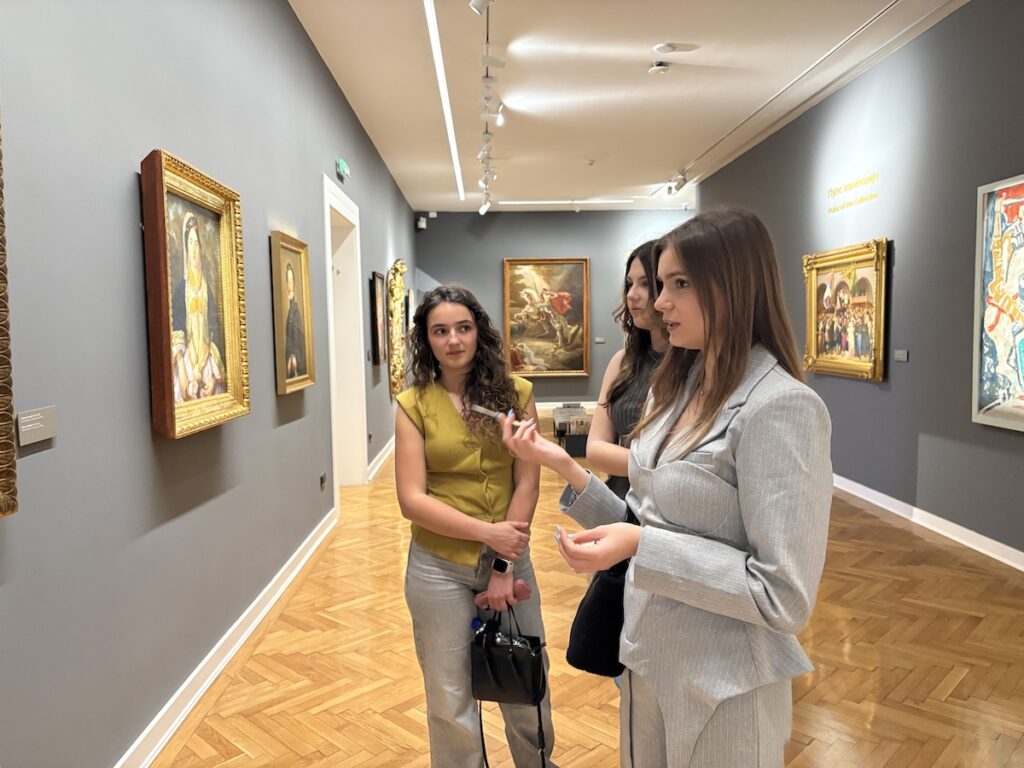
In the cultural segment of the programme, the students visited the Gallery of Matica Srpska, one of the most important cultural and artistic institutions in Serbia, where through interactive guidance and elements of the social game K(art)e, they dynamically explored the most significant works from the institution’s rich collection. This approach encouraged more active observation and a better understanding of artistic expression.
At the Museum of the City of Novi Sad, they visited the exhibition “Mileva: We Are the Rock,” dedicated to Mileva Marić Einstein, which presents her life and work through a contemporary and visually powerful concept. The combination of artistic installations and new technologies further enriched their experience and brought them closer to the intersection of science, art, and modern museology.
The programme also included a tour of the Petrovaradin Fortress, one of the most recognizable symbols of Novi Sad.
“For me, the study trip to Novi Sad was an unforgettable experience. Through a carefully designed programme, we became acquainted with the historical, cultural, and social context of the city, and experienced this journey in a unique and meaningful way. Although the visit was short, our days were filled with numerous activities and new experiences. It meant a lot to us that the entire programme was thoughtfully organized, which made us feel comfortable and safe. We are grateful for the opportunity to better understand the culture and history of Vojvodina through this visit,” emphasized Ena Božović.
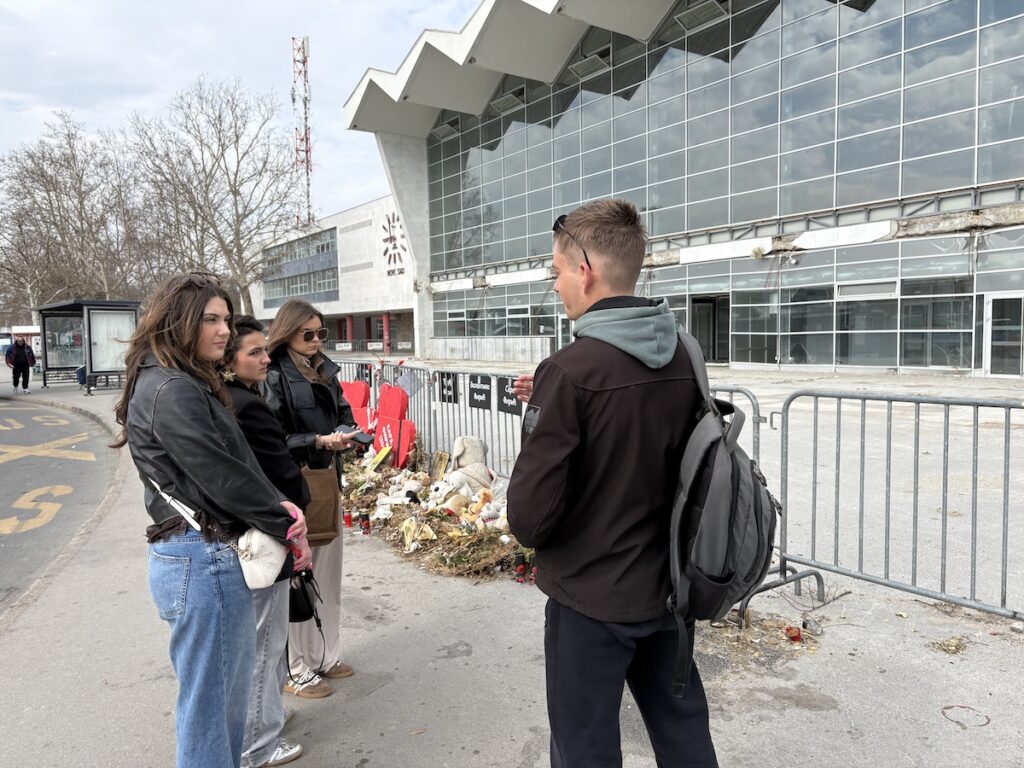
An important segment of the visit focused on the culture of remembrance and civic responsibility. The students visited the Memorial to the Victims of the Raid at the Quay of the Victims of the Raid, and through a conversation with director Aleksandar Reljić, they further raised awareness of the importance of a responsible attitude toward the past. This part of the programme was rounded off by paying tribute to the victims who died as a result of the canopy collapse at the Novi Sad Railway Station, as well as by learning about the context of the student protests that followed the tragedy and raised important questions about responsibility, safety, and youth engagement.
“This study visit was particularly significant for us because, through various activities, we gained new knowledge and better understood the topics we had previously studied. Direct encounters, visits, and discussions allowed us to view certain social, cultural, and historical issues from multiple perspectives,” said Anđela Popović.
The programme also included a visit to the organization Kulturanova, one of the most active non-governmental organizations in the field of youth work and the arts. During a meeting with Jelena Božić, programme coordinator, the students learned about the organization’s work as well as the opportunities the civil sector offers to young people, particularly through initiatives that encourage creativity, participation, and social responsibility.
The study visit was organized within the project “HEART: Supporting Youth Empowerment and Resilience Today,” implemented by CCE in cooperation with ADD from Novi Sad, with financial support from the European Union and co-financing from the Ministry of Public Administration.
Miloš Knežević, Development Coordinator