
Such programs contribute to strengthening the capacity of the education system to respond to the challenges of the digital age and to empowering teachers as key actors in the development of digitally literate and responsible generations, it was concluded at the digital citizenship training for education professionals organized by the Centre for Civic Education (CCE) on 16 and 17 April in Petrovac.
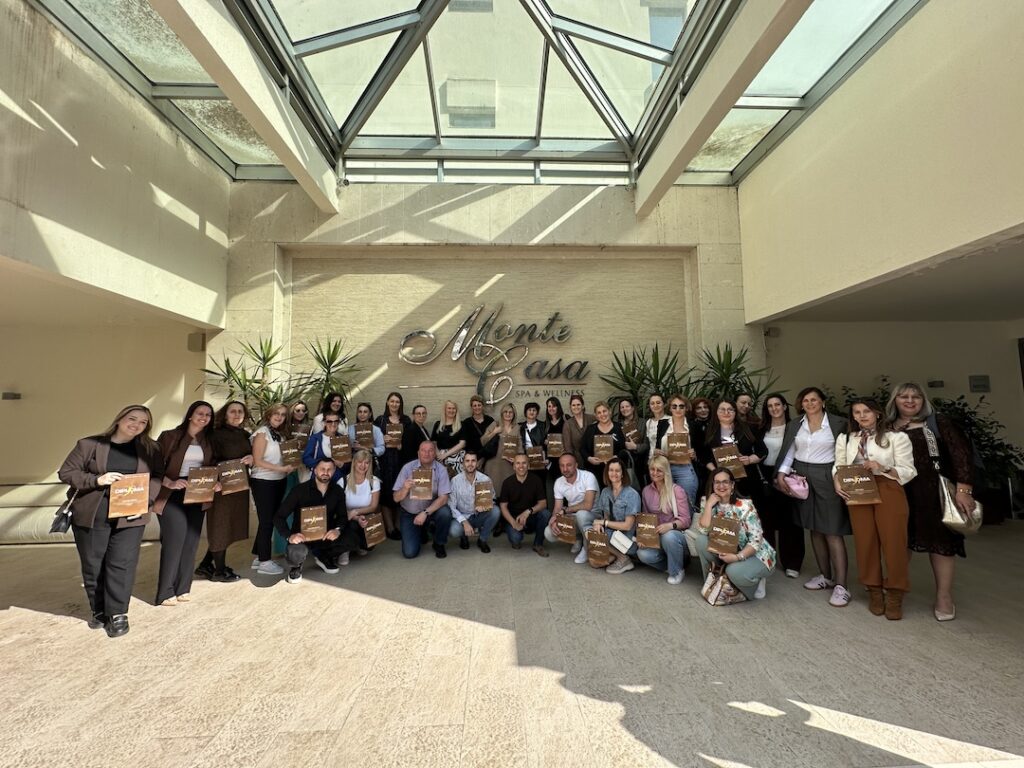
The training brought together 35 teachers from 13 municipalities across Montenegro: Nikšić, Cetinje, Pljevlja, Bijelo Polje, Podgorica, Tivat, Berane, Bar, Tuzi, Rožaje, Herceg Novi, Petnjica, and Danilovgrad, including teaching staff, school management, and professional services. Over two intensive days, participants were introduced to the digital citizenship framework, including concepts such as disinformation and the right to be forgotten, while also developing skills for fact-checking and supporting victims of cyberbullying. They also learned about the basics of artificial intelligence and its application in teaching, and worked on designing digital citizenship projects for their schools.
Dušanka Vujičić, a primary school teacher and Master of Information Management, led a session on the importance of understanding artificial intelligence and its role in education. “Artificial intelligence is already changing the way we learn and teach, which is why it is important for educators to understand its possibilities, but also its limitations. We focused on how to use artificial intelligence as support in the teaching process, while also fostering critical thinking and a responsible attitude toward technology among students. Today, digital citizenship implies active and conscious participation in the digital space, and schools play a key role in developing these competencies,” she stated.
“The right to be forgotten stems from the right to privacy, but has its own specificities that are particularly significant in the digital environment, where information often remains permanently accessible. It is important to understand how this right is exercised, both in the European context and in Montenegro, where it is often linked to media self-regulation mechanisms. We used practical, real-life examples to help teachers better understand the challenges they may face in schools, especially regarding the protection of children’s data and the use of photographs and video content,” said Paula Petričević, a teacher at Kotor Gymnasium and ombudswoman of Vijesti and Monitor, who led the session on the right to be forgotten.
Participants stressed the importance of such training for their professional development and work with students.
“The training was very useful, as it provided new knowledge that we can apply in our work with students. It is important for us as teachers to stay informed about modern technologies so that we can respond in a timely manner, guide students, and protect them from potential misuse in the digital environment. In this way, we also build trust with students, who recognize our readiness to support them,” said Valentina Gjolaj, a teacher of Montenegrin as a non-native language at “Mahmut Lekić” Primary School in Tuzi.
Similar impressions were shared by Anis Ramčilović, a physical education teacher at “Mahmut Adrović” Primary School in Petnjica. “The benefits of such training are multiple, as they contribute to improving teachers’ competencies in digital pedagogy and raising awareness about the importance of safe online behavior among both teachers and students. In the long term, such education contributes to creating more responsible digital citizens and a higher-quality education system. This training is an important step toward modernizing education in Montenegro, as it empowers education professionals to meet the demands of contemporary society and adequately prepare students for life in a digital environment,” he noted.
“In a time of rapid digitalization, it is important to be a digitally aware citizen, especially when working with children. This training enabled me to acquire new knowledge that I can directly apply in the classroom, from recognizing disinformation to understanding the permanence of content in the digital space. I found learning about the right to be forgotten particularly useful as an important aspect of privacy protection,” said Violeta Vujošević, a teacher of English language and literature at “Zarija Vujošević” Primary School in Zeta.
Aleksandra Punoš, a teacher of Montenegrin-Serbian, Bosnian, and Croatian language and literature at “Meksiko” Primary School in Bar, highlighted the practical value of the training and its impact on the teaching process. “Training on digital citizenship is extremely useful because it connects theoretical knowledge with practical work with students, parents, and colleagues. Such programs help us better understand contemporary trends and foster critical thinking among students. Through concrete examples and tools, it is possible to bring the digital world closer to students and encourage them to independently assess the quality and reliability of information,” she assessed.
The training is part of the programme “Protection of Rights and Promotion of Digital Citizenship – Montenegrin Digital Shield (MDS),” implemented by the CCE in partnership with the SHARE Foundation, in cooperation with the Agency for Audiovisual Media Services, with financial support from the European Union and co-financing from the Ministry of Regional-Investment Development and Cooperation with Non-Governmental Organizations.
Aleksandra Mihaljević, Project Assistant