
Debating fosters critical thinking, reasoned expression, and a culture of dialogue among young people, and is particularly important when addressing topics such as peer violence. Through this format, high school students learn to reflect on social issues, listen to different perspectives, and seek responsible answers, as highlighted during the debate competition on peer violence organized by the Centre for Civic Education (CCE) on 6 and 7 March at the University of Donja Gorica in Podgorica.
“We started very relaxed and without any expectations, and ended up reaching the third-place debate, which is an additional reason for satisfaction, especially considering that this was our first debate competition. It was enjoyable and useful because we met many new people, further developed teamwork and team spirit, and we left this competition richer with a new experience and a special adventure,” said Zoran Radulović from the team “Powerlessness of Violence”.
Eight teams from several municipalities in Montenegro participated in the debate competition, including teams from Podgorica, Tuzi, Cetinje, Nikšić, and Kotor. The different experiences, perspectives, and arguments they brought to the competition enriched it, confirming that young people have the capacity to speak seriously, thoughtfully, and responsibly about the challenges that shape their development and everyday lives.
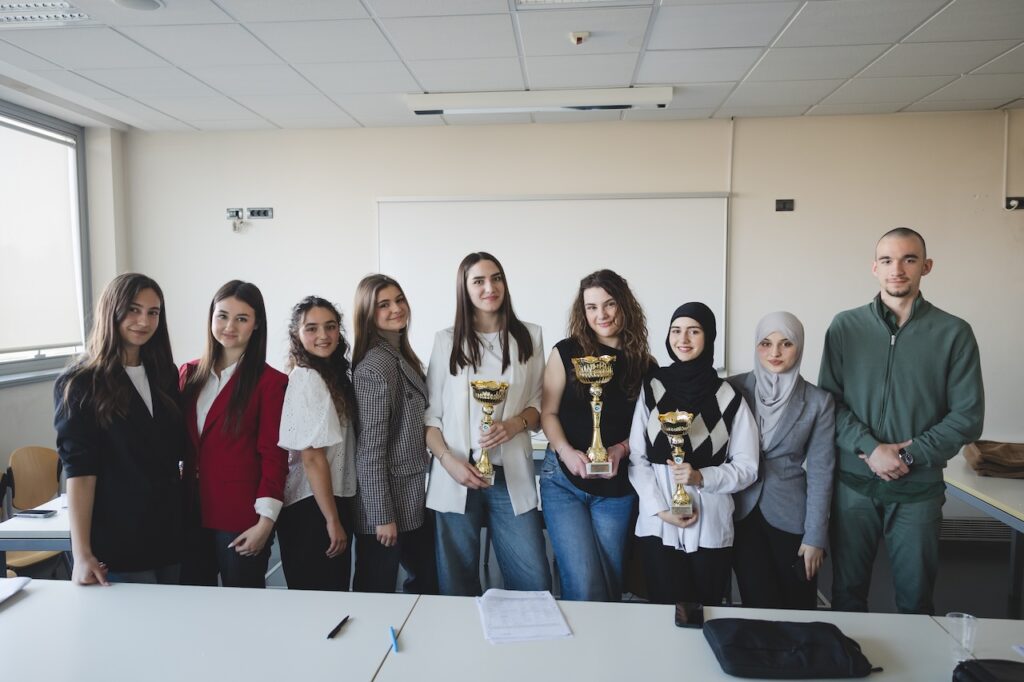
Third place was won by the debate team of the “Mehmed Fatih” Madrasa from Tuzi, consisting of Ilda Sijarić, Imran Bahović, and Mejrem Osmanović. Second place went to the team from the “Slobodan Škerović” Gymnasium in Podgorica, composed of Ksenija Živković, Olja Obradović, and Una Milonjić. First place in the debate competition on the topic of peer violence was won by the team from the Kotor Gymnasium, consisting of Anđela Popović, Marta Borović, and Ena Božović.
“Along with the competitive spirit we developed, we also formed new friendships, and the atmosphere throughout the competition was very pleasant. The judges were professional, and we had the freedom to express our views, which was especially important to us. I would recommend this format to everyone because it helps overcome fear, strengthens team spirit, and improves the way we shape and argue our own opinions. It is truly a high-quality competition,” said Ilda Sijarić from the third-place team from Tuzi.

Ksenija Živković, from the second-place team from Podgorica, described the debate competition as “a wonderful experience, not only for me but also for my teammates. We gained a lot of new knowledge as well as many new friendships. We hope we will have the opportunity to participate again and continue our cooperation with these wonderful people.”
Marta Borović, a member of the winning team from Kotor, described the debate competition as very successful, noting that it enabled participants to learn new information, examine the topic from different perspectives, and improve their communication skills. “It was clear that the students were well prepared, as they presented quality arguments and examples that contributed to a better understanding of the topic. This activity achieved its goal and was a very useful experience for all participants,” she said.
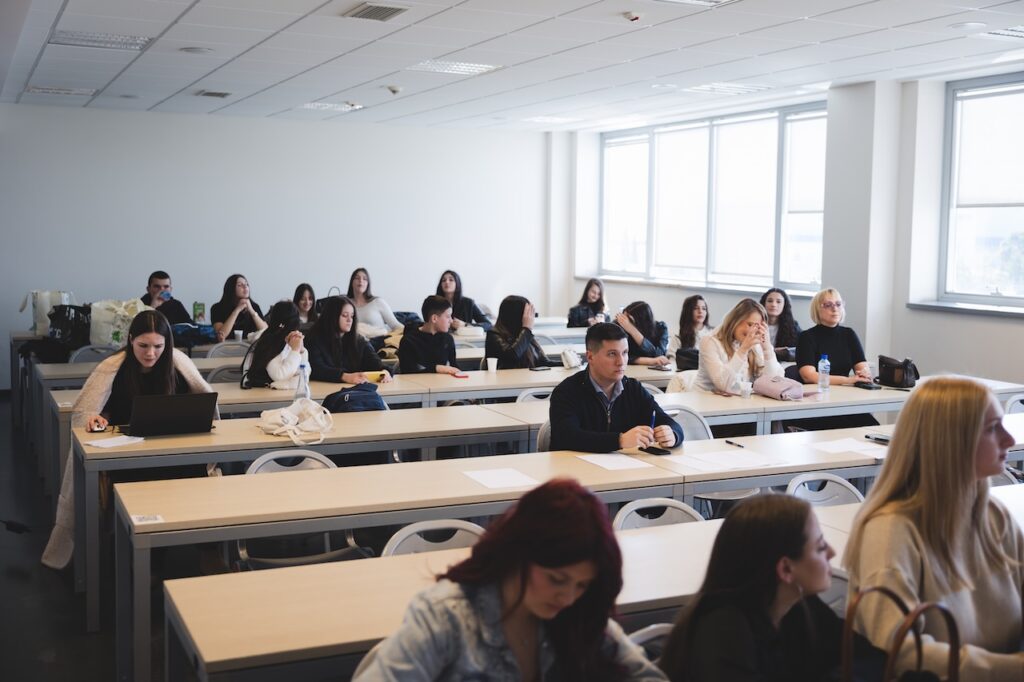
The first-place team won a study trip to Novi Sad. The second-place team received a voucher worth €100 for purchasing books for each team member, while the third-place team received a €50 book voucher for each student.
The debate competition was organized within the project “HEART: Supporting the Empowerment and Resilience of Youth Today”, financially supported by the European Union and co-funded by the Ministry of Public Administration.
Alma Novalić, Programme Assistant