
A sound system response to peer violence and juvenile delinquency must be swift, but not panicked. It must protect the victim, but also work with the perpetrator. It must involve the school, the family, the centre for social work, the healthcare system, the police when necessary, and the local community. The worst scenario is when everyone shifts responsibility onto someone else. It is precisely then that a child remains caught between escalating risks and an absent response, it was stated today at the first panel of the conference “Between Risks and Responses: Prevention of Peer Violence and Juvenile Delinquency”, organised by the Centre for Civic Education (CCE), within the project “HEART: Supporting Empowerment and Resilience of Youth Today”, implemented in partnership with the Regional Academy for Democratic Development (ADD), with the support of the EU Delegation to Montenegro and co-financing from the Ministry of Public Administration.
“This project emerged from the need to react before consequences become severe, through a responsible and systemic approach. Peer violence and juvenile delinquency are serious social issues that require coordinated action by institutions, the community, and young people,” said Miloš Knežević, Development Coordinator at CCE, also noting that research findings warn there is no room for relativising the problem and that a much more decisive, serious, and continuous response from all relevant actors to peer violence is necessary.

“The analysis has also shown that the system must be significantly more focused on the resocialisation and reintegration of juveniles, alongside better inter-institutional cooperation and stronger practical support. A normative framework alone is not sufficient if, in practice, it does not ensure effective measures, timely support, and real opportunities for young people to return to safer and more supportive environments,” Knežević emphasised.
Through the project, as Knežević highlighted, the capacities of the police, schools, judiciary, and other actors working with youth and juveniles have also been strengthened, as an effective institutional response is not possible without continuous cooperation, professional development, and sensitisation to the needs of children and young people. “It is important that those who are often the first point of contact within the system have the knowledge, tools, and support to respond in a timely, responsible, and sensitive manner,” he stated, warning that peer violence is a persistent problem in our society that continues to grow, while opportunities to suppress it are being missed.
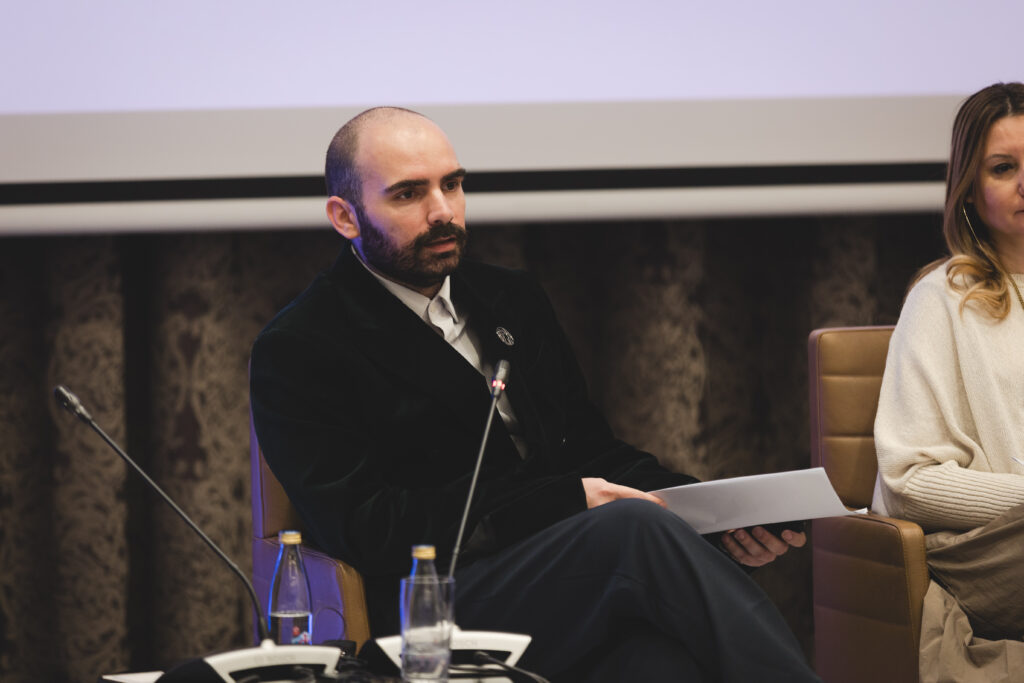
“One of the key conclusions is that young people are not only a group to be protected, but also agents of change, to whom society must provide more space, trust, and support. Through camps, peer workshops, debate programmes, and other activities, it has been shown that when young people are given knowledge, opportunity, and encouragement, they can become strong allies in building a safer, more resilient, and inclusive society,” Knežević stressed.
Aleksandra Jerkov, co-founder of ADD, pointed out that “peer violence and juvenile delinquency are the result of accumulated risks – from domestic violence and social exclusion, through school failure and lack of institutional support, to the increasingly prevalent digital violence.” She also warned about the normalisation of violence in the public sphere through discourse that encourages intolerance and aggression.
“When we look at Serbia, we cannot overlook the tragedies of May 2023: OŠ ‘Vladislav Ribnikar’, followed by Dubona and Malo Orašje. These events shook the entire society and opened an extensive public debate on violence among young people, the availability of weapons, the responsibility of parents, as well as the role of schools, media, and institutions. However, to this day, neither society nor the families of the victims have received an answer to the key question: which parts of the system failed in prevention, and which in the response to these tragedies,” she said.
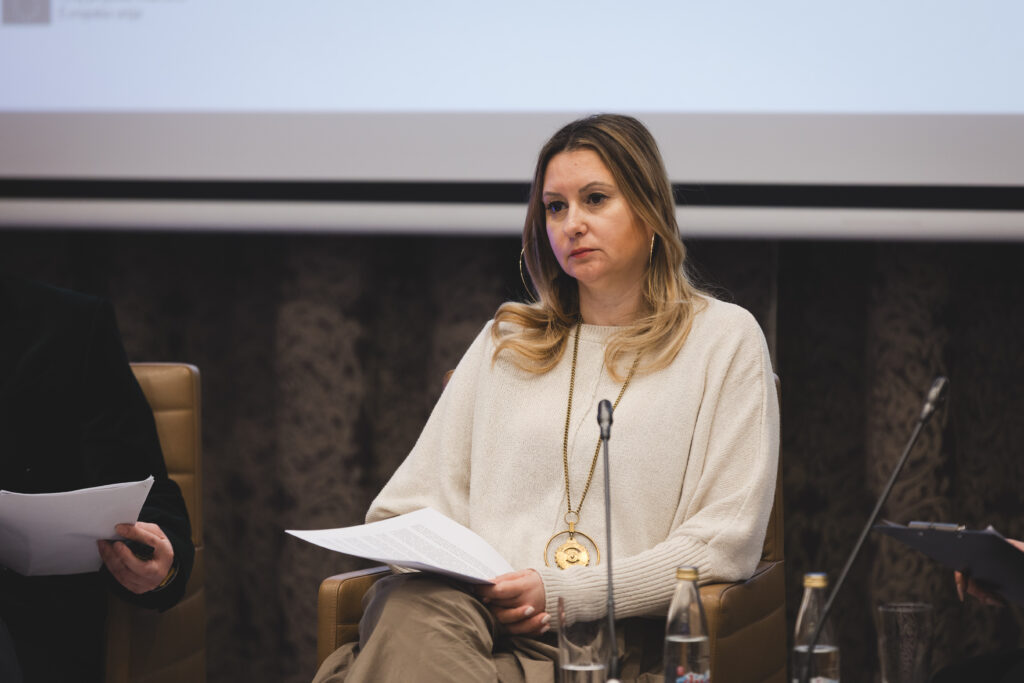
“Why was the system’s response inadequate? Because it has become evident that the normative framework and the actual capacity of the system are not the same. It is not enough to have a strategy if it is not fully implemented. It is not enough to have a rulebook if the school lacks the support to enforce it. It is not enough to react once violence occurs. UNICEF’s situational analysis for Serbia highlights the need for stronger psychological and emotional support for children and adolescents, as well as broader institutional weaknesses affecting child protection,” Jerkov explained.
“The fight against peer violence and juvenile delinquency is directly linked to the overall social environment. It is not possible to build a culture of non-violence within the education system while, at the same time, patterns of aggression and impunity are tolerated or encouraged in the public sphere,” Jerkov concluded.
Alma Novalić, Programme Assistant