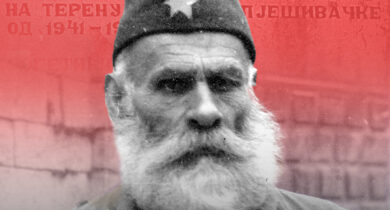

For most ethnic Montenegrins, the year 1918 rightly evokes negative emotions. Although exhausted by the Balkan Wars, Montenegro mobilized its army at the end of July 1914, expressing solidarity with Serbia before any other European state, and fought for about eighteen months on the side of the Allies during the First World War. It was… »
Actual
Lawful Removal of the Pavle Đurišić Monument – A Matter of Justice and Values
Civil society organizations and civic activists express concern over the inadequate actions of the competent authorities regarding the monument to Pavle Đurišić, particularly because a renewed inspection of the Đurđevi Stupovi Monastery residence has still not been carried out to seize the object that constitutes evidence of a criminal offence. We emphasize several important criminal-law… »
Public Call for Participants of the Training for Teaching Staff and School Psychological-Pedagogical Services on Recognizing and Preventing Homophobic Peer Violence in the School Environment
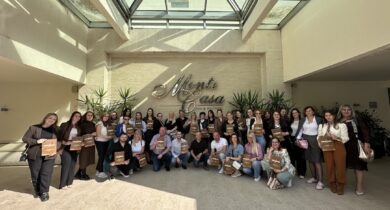
Centre for Civic Education (CCE) announces PUBLIC CALL for participants of the training for teaching staff and psychological-pedagogical services in schools on recognizing and preventing homophobic peer violence in the school environment The aim of this one-day training is to empower professionals in the school environment to recognize, prevent, and effectively respond to situations of… »
Systematic, not reactive and partial transparency is needed
Centre for Civic Education (CCE) welcomes the reaction of the Deputy Prime Minister for Security, Defence, the Fight against Crime and Internal Policy, Aleksa Bečić, whose office, only 52 minutes after CCE’s statement on the lack of transparency of the Government’s General Secretariat (GGS), published part of its expenditures related to official travel. Such a… »
Better Securing of Evidence Means Less Material for Netflix
Centre for Civic Education (CCE) points out that the first-instance verdict in the “Tunnel” case has once again raised the issue of the necessary amendments to the Criminal Procedure Code (CPC), particularly in the part concerning the securing of evidence through sampling. Two years after this case, the competent authorities have still not adopted the… »
Remembrance of Victims Must Not Be Closed Off
Human Rights Action (HRA), the Centre for Civic Education (CCE), and the Centre for Women’s and Peace Education ANIMA express their regret and protest over the fact that the authorities of Montenegro, instead of ensuring a dignified commemoration of the war crime committed against Croatian prisoners in the former “Morinj” camp, sent out ambivalent and… »
An exhibition that opens a dialogue about the 1990s and our present
Thirty years later, we are witnessing worrying similarities with the 1990s, which is why this exhibition serves both as a reminder of the importance of resisting the regressive ideologies that marked that period, and a warning to reflect for us as a society and not repeat the mistakes of the past, is one of the… »
Who Is Protecting the Hooligans Who Disrupted the Screening of a Film in Albanian?
Civil society organizations and civic activists once again call on the State Prosecutor’s Office and the Police Directorate to finally inform the public about the status of the investigation into the violent disruption of the screening of the film “Roda”, which was interrupted solely because it was in the Albanian language. More than a month… »
34 Years Since the Death of Krsto Đurović: A Street in His Hometown Will Bear His Name
Today marks 34 years since the death of Krsto Đurović, Rear Admiral of the Yugoslav People’s Army (JNA), who died in a helicopter crash in 1991 under circumstances that remain unclear, during the early days of the JNA attack on the Dubrovnik area of the Republic of Croatia. ‘As long as I am commander, you… »
History education in the region – between myths and science
Although the Western Balkan countries are formally moving toward European integration, the legacy of the 1990s still shapes their public sphere. Without multiperspective approach to history teaching that develops critical thinking, there can be no genuine dealing with the past or reconciliation. Projects such as the Joint History Textbooks have shown that agreement is possible,… »